
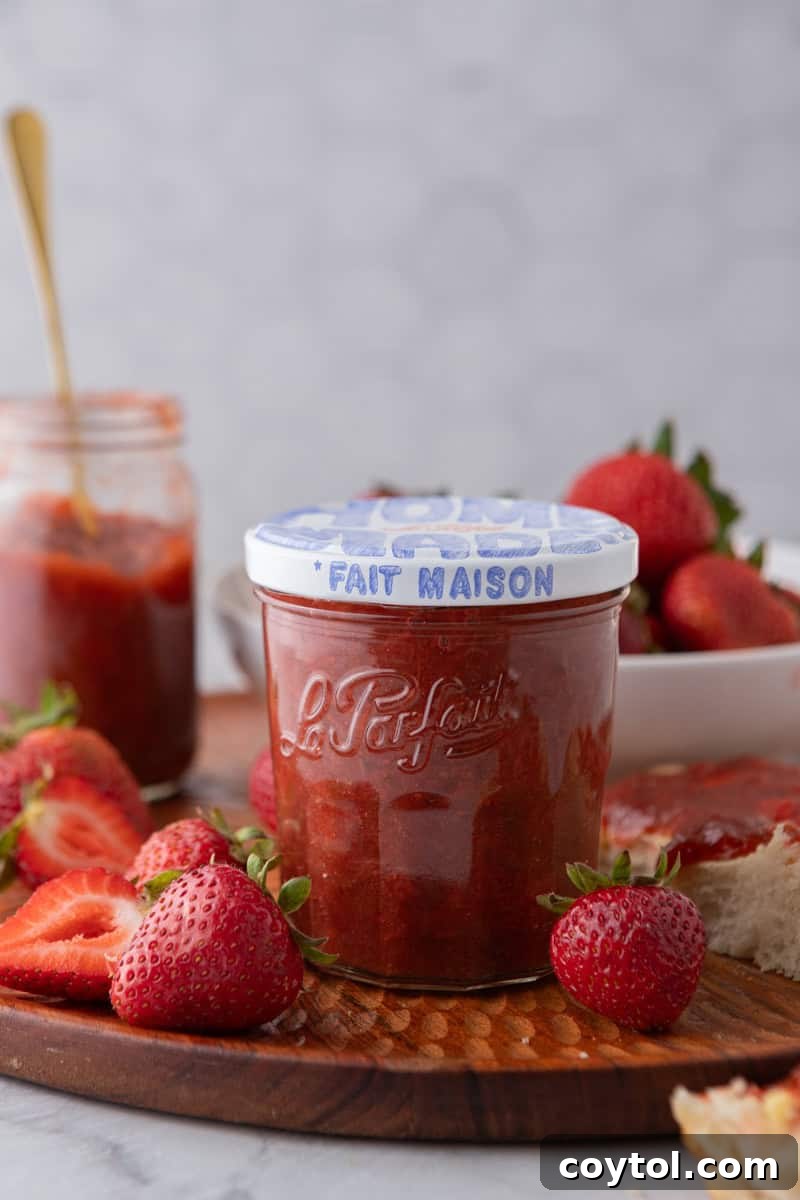
Homemade Strawberry Rhubarb Jam: A Simple, No-Pectin Recipe
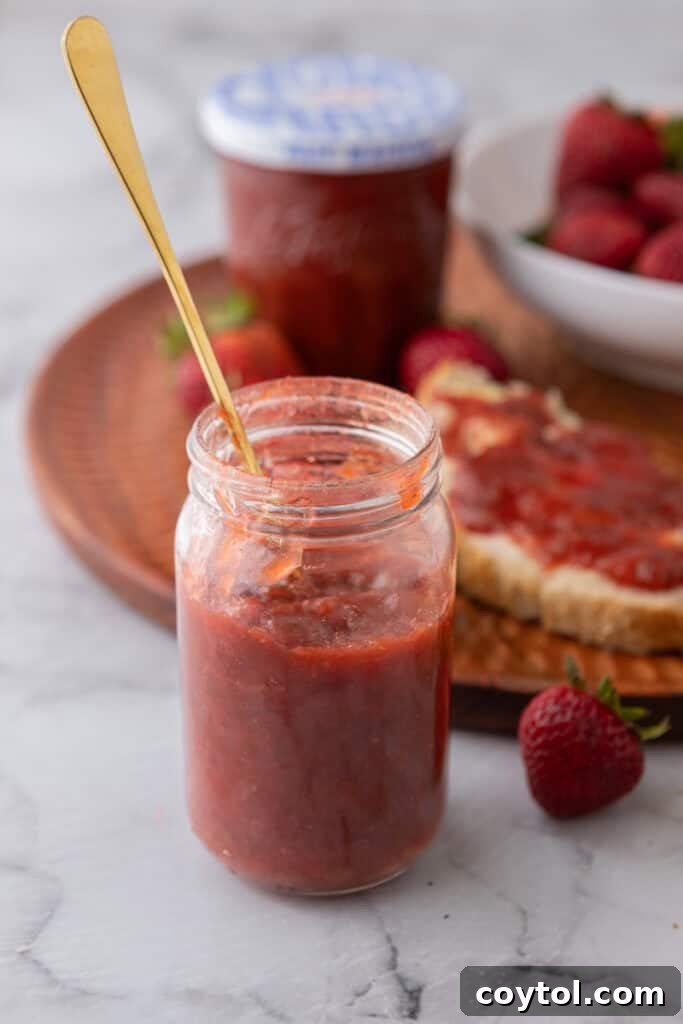
There’s nothing quite like a jar of homemade jam, brimming with the fresh flavors of spring. This easy Strawberry Rhubarb Jam recipe is your perfect companion for utilizing that seasonal bounty, delivering a delightful sweet and tart experience without the need for any added pectin. Incredibly simple to prepare, this jam is fantastic for canning, storing in the fridge, or freezing for later enjoyment. While it’s tempting to savor by the spoonful, it truly shines when spread generously over fresh bread and butter, making for an unforgettable breakfast or an elegant afternoon tea.
Growing up, the ritual of fresh bread, creamy butter, and a spoonful of vibrant strawberry jam was a daily highlight. I’d eagerly await the end of school, knowing a visit to my grandmother’s house meant indulging in her incredible homemade bread, generously slathered with her signature jam. It was a simple pleasure that left a lasting imprint on my heart and palate.
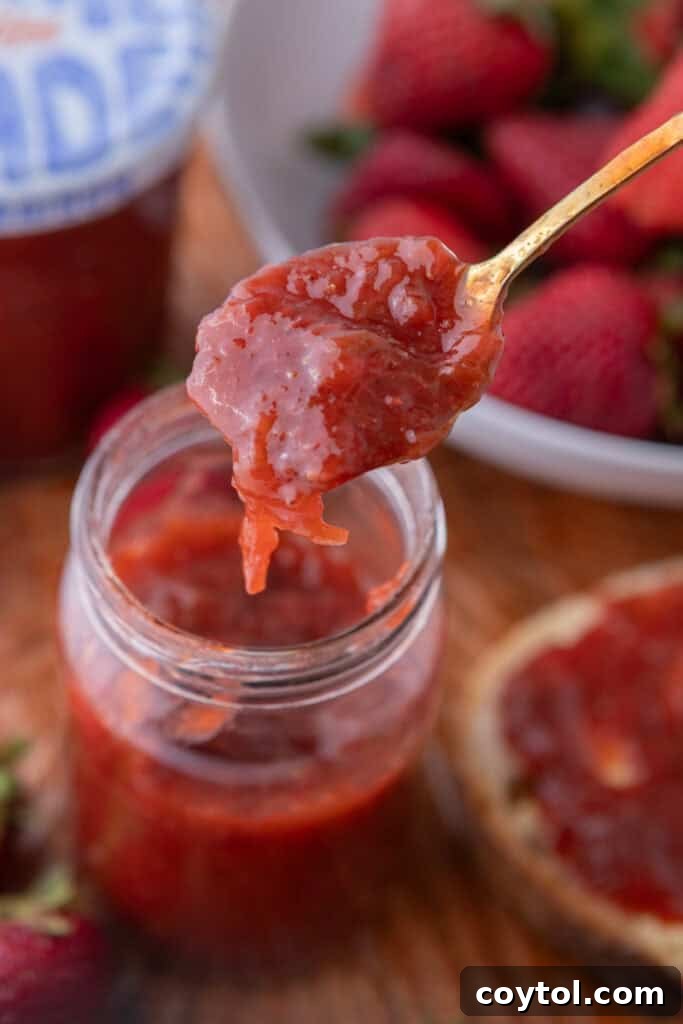
Today, I’m thrilled to share my own rendition of that cherished classic, introducing the delightful tang of rhubarb – an ingredient I didn’t encounter much during my childhood in Algeria. Discovering how beautifully rhubarb’s tartness complements the natural sweetness of strawberries was a revelation. This unique pairing creates a jam that feels both nostalgic and wonderfully fresh. It’s a recipe that has become a staple in my home, and I sincerely hope you find as much joy in making and enjoying it as we do!
Why You’ll Love This Easy Strawberry Rhubarb Jam
This recipe isn’t just another jam; it’s a celebration of simple ingredients and straightforward techniques that yield extraordinary results. Here’s why it’s bound to become a favorite in your kitchen:
- Naturally Thick and Velvety: Say goodbye to commercial pectins! This recipe relies on the natural pectin present in the fruits and the acidity of lemon juice, creating a perfectly set jam with a luscious texture.
- Vibrant Sweet and Tart Flavor: The harmonious blend of juicy strawberries and tangy rhubarb creates a complex flavor profile that is both refreshing and comforting. It’s not overly sweet, allowing the true fruit flavors to shine.
- Effortlessly Simple: Designed with beginners in mind, the steps are clear, concise, and don’t require any specialized equipment beyond a good saucepan and a potato masher (unless you prefer a smoother jam).
- Versatile for Preserving: Whether you prefer the convenience of fridge storage, the longevity of freezing, or the tradition of water bath canning, this jam adapts beautifully to various preservation methods.
- Wholesome and Homemade: Made with fresh, whole ingredients, you control exactly what goes into your jam. No artificial flavors or preservatives, just pure fruity goodness.
For those who love delectable spreads, be sure to explore other favorites like our Healthy Homemade Strawberry Chia Jam (No Sugar Added). And if you’re a fan of strawberry-infused treats, don’t miss these amazing Chilled Crumbl Chocolate Strawberry Cheesecake Cookies, Crumbl Strawberry Pop Tart Cookies, classic Almond Thumbprint Cookies with Jam, and a simple yet elegant Chocolate Dipped Strawberries Recipe.
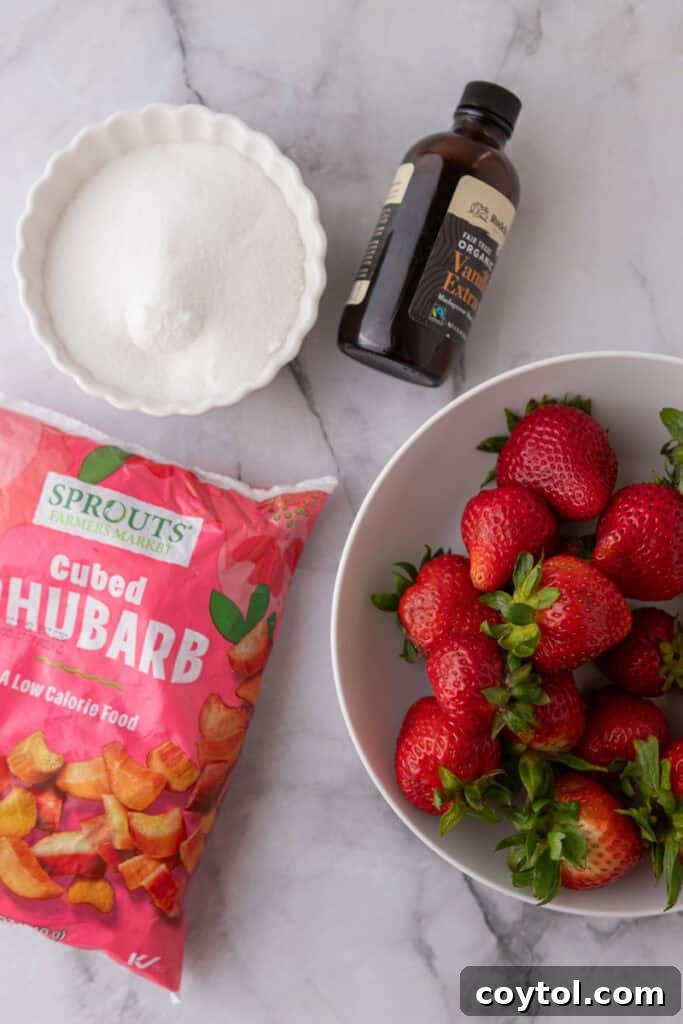
Essential Ingredients for Your Easy Strawberry Rhubarb Jam
Crafting this delicious jam requires just a handful of fresh ingredients, each playing a crucial role in its flavor and texture. Here’s a closer look at what you’ll need:
- Strawberries: The star of the show, providing natural sweetness and a beautiful ruby color. I highly recommend using fresh, ripe strawberries when they are in season for the best flavor. However, frozen strawberries work perfectly well too, offering convenience year-round.
- Rhubarb: The delightful tangy counterpoint to the strawberries. Fresh rhubarb stalks are ideal during spring and early summer. If fresh isn’t available, frozen rhubarb is an excellent substitute and often requires slightly longer maceration time.
- Granulated Sugar: Not just for sweetness, sugar is indispensable in jam making. It acts as a preservative, enhances flavor and color, and, crucially, works with the fruit’s natural pectin to achieve that perfect, thick jam consistency. Any standard white granulated sugar will do.
- Lemon Juice: Freshly squeezed lemon juice brightens all the flavors and, more importantly, provides the necessary acidity to activate the natural pectin in the fruit, helping the jam set properly without added pectin.
- Salt: A tiny pinch of salt elevates the overall flavor profile, balancing the sweetness and tartness, making the jam taste even more vibrant and complex.
- Vanilla Extract (Optional): A touch of vanilla adds a wonderful depth and warmth to the jam. For an extra special touch, consider using a vanilla bean or vanilla bean paste for a richer, more gourmet flavor.
The Science Behind No-Pectin Jam: Sugar, Acid, and Heat
Understanding the role of sugar in jam goes far beyond mere sweetness. It’s a critical component for texture, preservation, and flavor development.
When making jam without added pectin, you’re relying on the natural pectin found in fruits. Strawberries are relatively low in pectin, but rhubarb is a good source. The key to activating this natural pectin and achieving a firm set lies in a delicate balance between fruit, sugar, and acid (lemon juice). As the fruit cooks down with sugar and lemon juice, the pectin molecules bind together, creating the gel-like structure we associate with jam.
Sugar is also a powerful natural preservative. By creating a high-sugar environment, it reduces the water activity in the jam, making it difficult for bacteria and mold to grow. This is why the precise amount of sugar in a no-pectin recipe is so important for both the jam’s final consistency and its shelf life.
While it is possible to reduce the sugar, doing so would necessitate the addition of commercial pectin and other adjustments to achieve a similar thick, spreadable result. For this traditional, no-pectin method, adhering to the sugar quantity is essential for success.
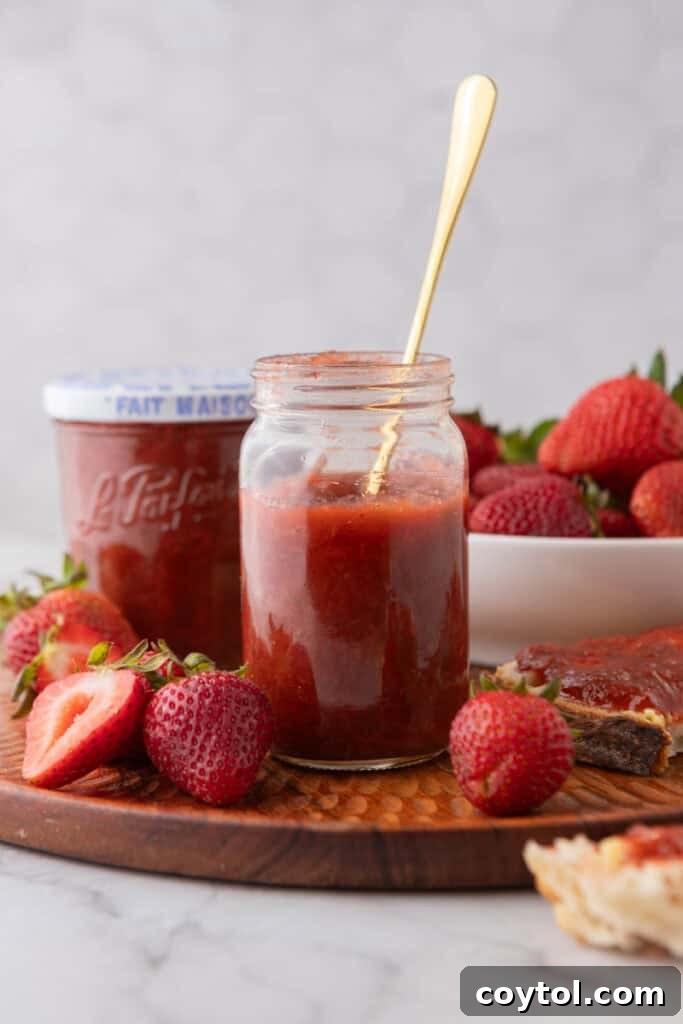
Step-by-Step: Crafting Your Homemade Strawberry Rhubarb Jam
Making this delightful jam is straightforward. Follow these simple steps for a perfect batch. For exact measurements and detailed instructions, refer to the recipe card below.
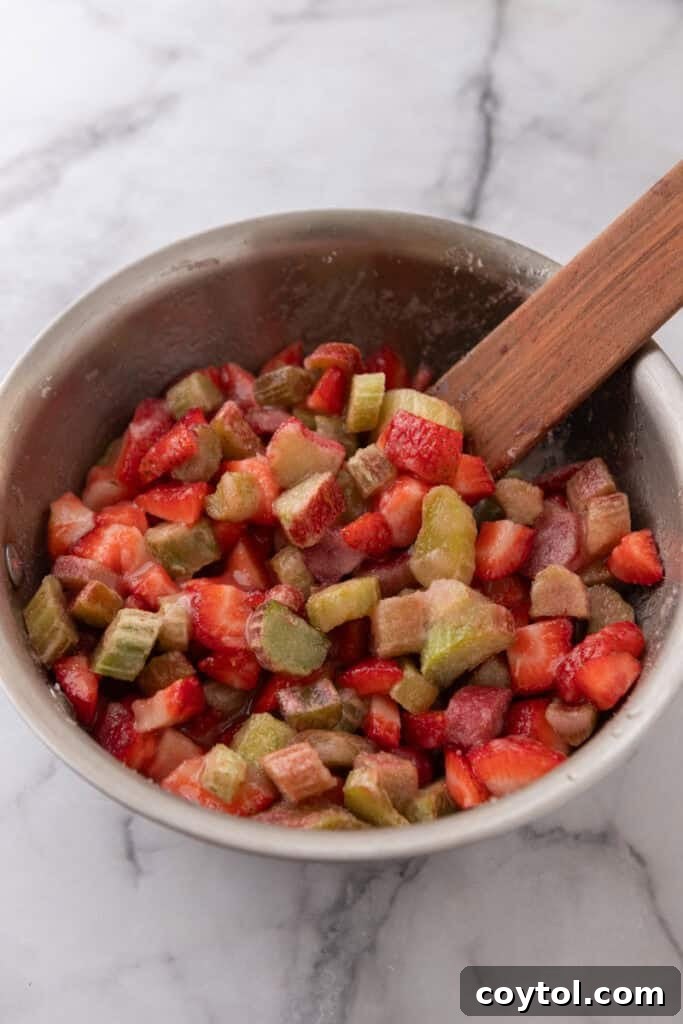
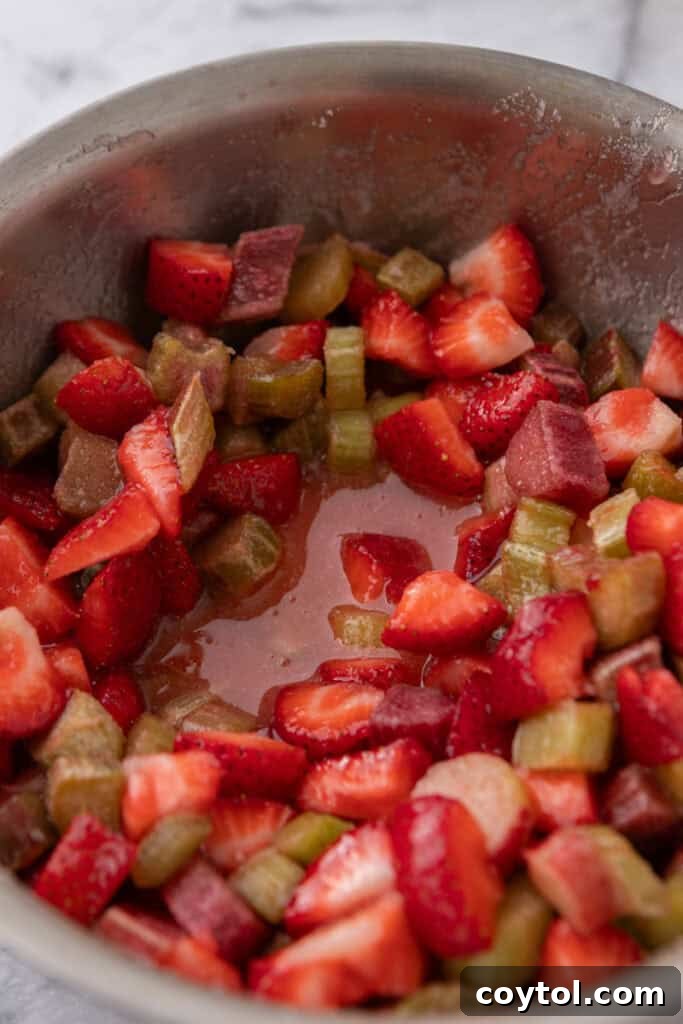
- Macerate the Fruits: In a large, heavy-bottomed saucepan, combine the chopped strawberries, diced rhubarb, granulated sugar, a pinch of salt, and fresh lemon juice. Stir everything gently to coat the fruit. Let the mixture sit at room temperature for at least 20-30 minutes, or even up to an hour. This crucial step, known as maceration, allows the sugar to draw out the natural juices from the fruit, creating a beautiful syrup before you even begin cooking. This also helps reduce the amount of foam during cooking.
- Begin Cooking: Place the saucepan over medium heat. Bring the fruit mixture to a gentle boil, stirring occasionally to ensure the sugar fully dissolves and doesn’t stick to the bottom. Once boiling, reduce the heat to a steady simmer.
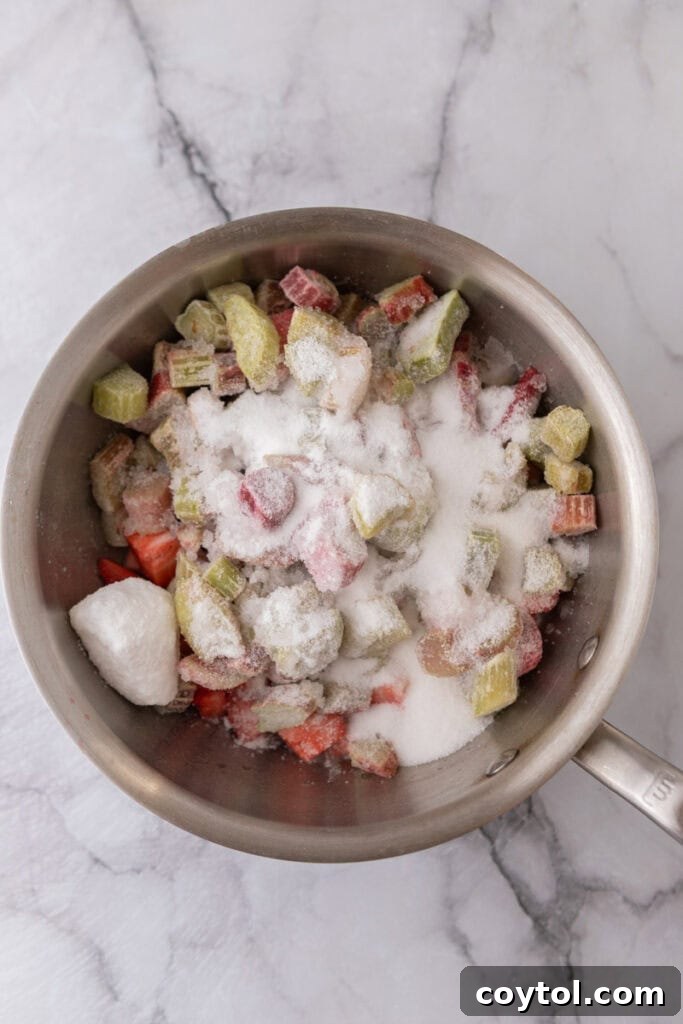
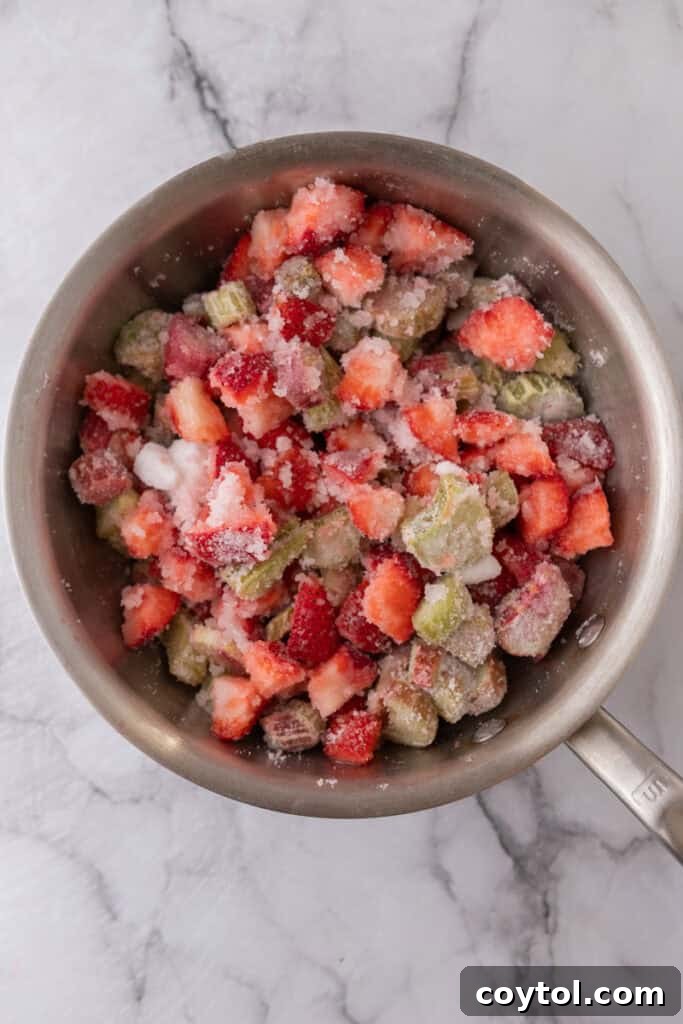
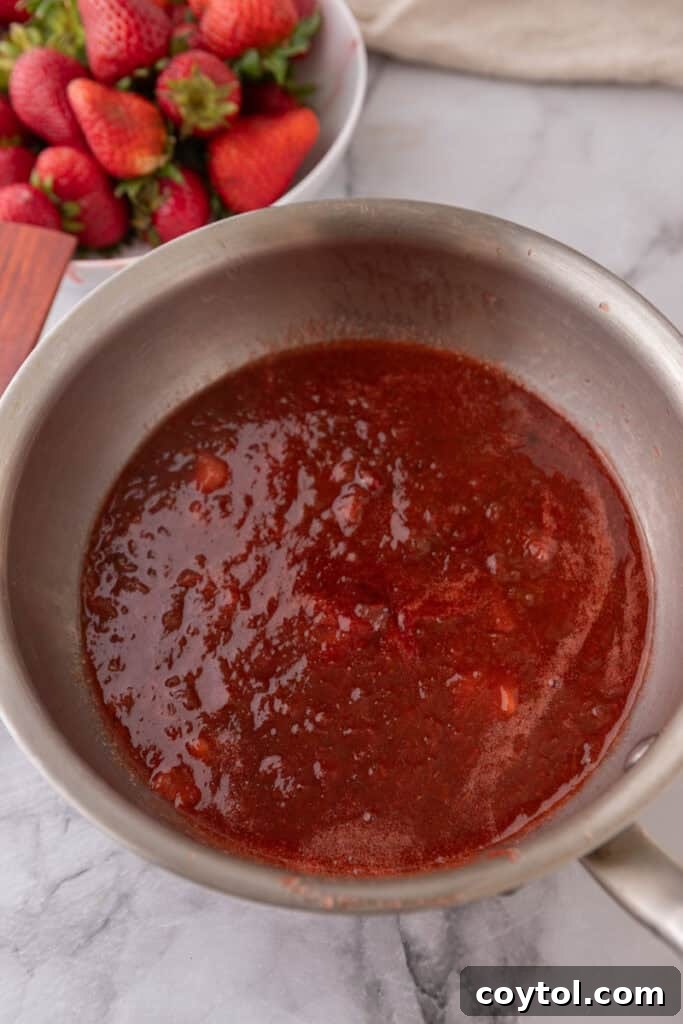
- Simmer and Thicken: Continue to simmer the jam, stirring frequently, especially as it thickens, to prevent scorching. Cook for about 20-25 minutes, or until the jam reaches your desired consistency. The fruit will break down, and the liquid will reduce and thicken.
- Check for Doneness: To test if your jam is ready, use the “wrinkle test.” Place a small plate in the freezer for a few minutes before you start cooking. Spoon a small amount of hot jam onto the cold plate, let it sit for about 30 seconds, then push it with your finger. If the surface wrinkles, your jam is set. If not, continue simmering for a few more minutes and re-test. Alternatively, use a candy thermometer; jam typically sets at around 220°F (104°C).
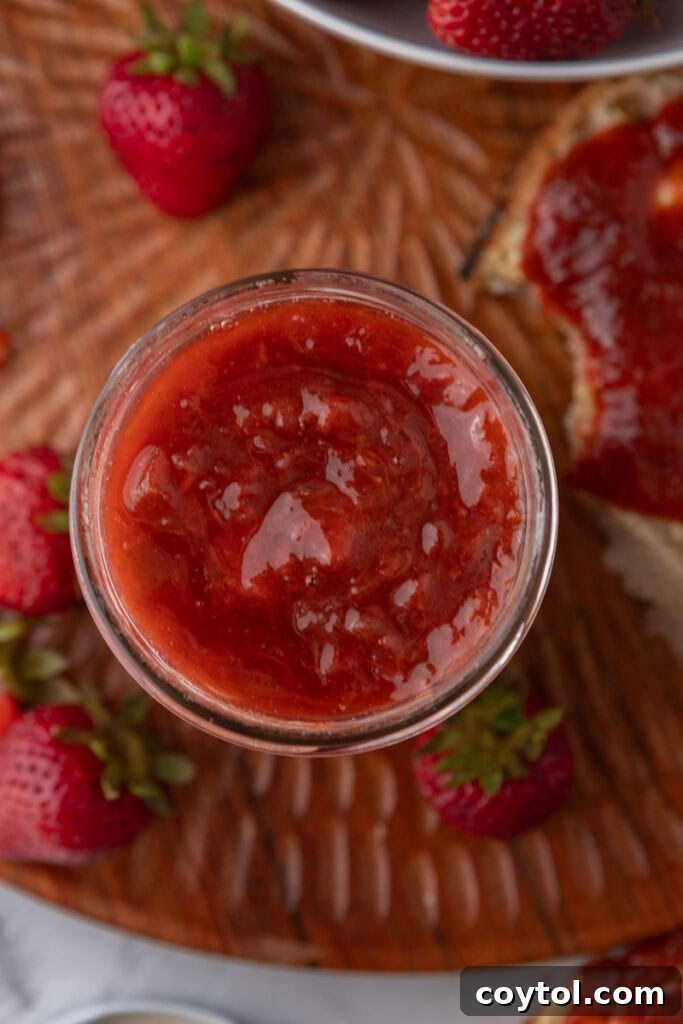
- Achieve Desired Texture: For a chunky jam with delightful fruit pieces, gently mash the fruit directly in the saucepan using a potato masher. If you prefer a smoother, more spreadable consistency, carefully blend a portion or all of the jam with an immersion blender.
- Add Vanilla (Optional): Once the jam is removed from the heat, stir in the vanilla extract, if using.
- Cool and Store: Allow the hot jam to cool slightly in the saucepan before carefully transferring it to clean, sterilized jars. As it cools further, it will continue to thicken. Store the jam in the refrigerator for up to 3 weeks, or proceed with canning or freezing for longer preservation.
Homemade Strawberry Rhubarb Jam: Expert Tips for Success
- Don’t Skip Maceration: Allowing your fruit to sit with sugar and lemon juice before cooking is key. This step draws out moisture, intensifies flavors, and can help reduce foam formation during cooking.
- Use a Wide, Heavy-Bottomed Pan: A wide saucepan provides a larger surface area for evaporation, which helps the jam thicken faster and more evenly. A heavy bottom prevents scorching.
- Master the Wrinkle Test: This simple cold plate test is your most reliable indicator for jam doneness when not using a thermometer. It prevents overcooking or undercooking.
- Experiment with Fruit Combinations: This strawberry rhubarb base is versatile! Feel free to mix in other berries like raspberries or cherries, or even a touch of orange zest for a different flavor dimension. Just try to maintain similar fruit-to-sugar ratios.
- Sterilize Jars for Longer Storage: If you plan on gifting your jam or storing it for more than a few weeks, proper sterilization of your jars is crucial. Boiling jars for 10 minutes helps eliminate bacteria and ensures a safe, longer shelf life.
- Mind the Foam: While maceration helps, a small amount of foam might still appear. Skim it off with a spoon during cooking for a clearer, more appealing jam.
- Chill Your Spoons: Keep a spoon in the freezer to quickly test the jam’s consistency. Drip a small amount onto the cold spoon; if it slowly coats the back of the spoon, it’s getting close to set.
Preserving Your Jam: Storage Options
Once your delicious strawberry rhubarb jam is made, you have several options for storage, depending on how long you want it to last:
Refrigerator Storage
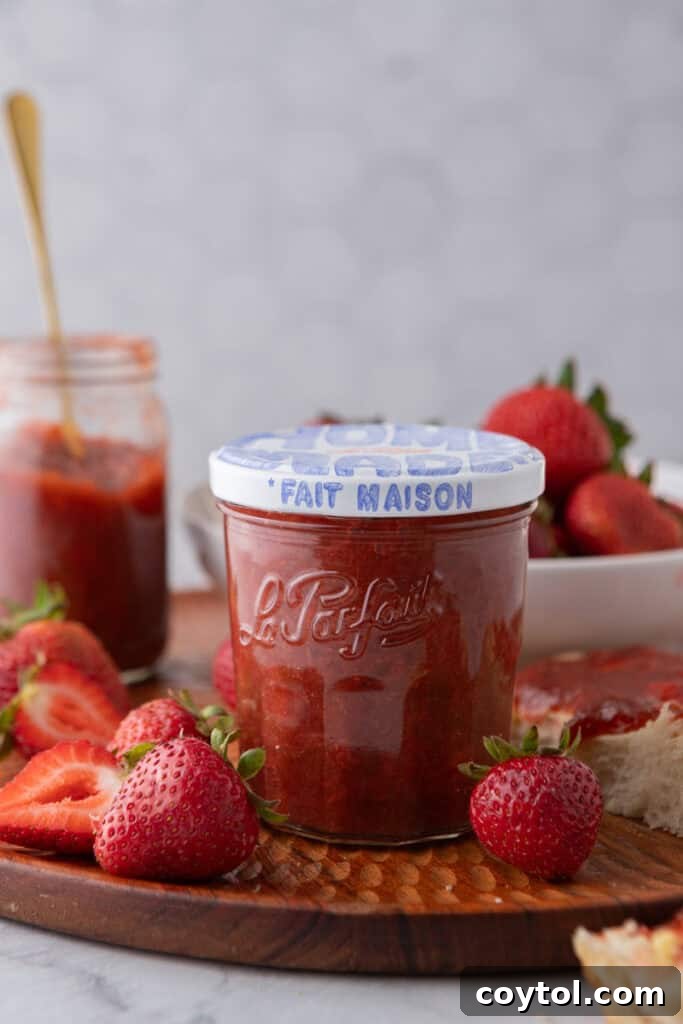
For immediate enjoyment or short-term storage, simply transfer the cooled jam into clean, airtight containers or jars. It will keep beautifully in the refrigerator for up to 3 weeks.
Freezing Jam
Freezing is an excellent option for longer storage without the need for canning. Let your jam cool completely, then pour it into freezer-safe containers, leaving about 1/2 inch of headspace to allow for expansion. Freeze for up to 6 months. Thaw in the refrigerator before use.
Canning: Hot Water Bath Method for Shelf Stability
If you wish to make your jam shelf-stable for up to a year, the hot water bath canning method is ideal. This process creates a vacuum seal that preserves the jam safely at room temperature.
Equipment You Will Need:
- Sterilized half-pint jars or pint jars with new lids and bands.
- A large canning pot or stockpot, deep enough for jars to be fully submerged in water.
- A jar lifter or sturdy tongs.
- A canning funnel (jelly funnel) for easy filling.
- Clean towels or a cooling rack.
Step-by-Step Canning Process:
- Prepare Jars: Wash jars, lids, and bands in hot, soapy water. Sterilize the jars by boiling them in a large pot for at least 10 minutes. Keep them hot until ready to fill. Lids do not need to be boiled for sterilization but should be kept hot.
- Fill Jars: Carefully ladle the hot jam into the hot sterilized jars using a canning funnel, leaving about 1/4 inch of headspace (space between the jam and the rim of the jar).
- Clean Rims and Seal: Wipe the jar rims thoroughly with a damp, clean cloth to remove any jam residue. This ensures a proper seal. Place the hot lids on top and screw the bands on until they are just “fingertip-tight” – don’t over-tighten them.
- Process in Water Bath: Gently place the filled jars into the canning pot, ensuring they are fully covered by at least 1 inch of boiling water. Bring the water back to a full, rolling boil. Process the jars for 10 minutes. (If you live at an elevation over 1,000 feet, you will need to increase processing time: add 5 minutes for every 1,000 feet above sea level, e.g., 15 minutes for 1,000-6,000 ft, 20 minutes for over 6,000 ft).
- Cool and Check Seals: Carefully remove the hot jars from the pot using a jar lifter and place them on a clean towel or cooling rack, ensuring they are not touching. Let them sit undisturbed for 12-24 hours to cool and seal. You will hear a “pop” sound as the lids seal. Once cool, press the center of each lid; if it doesn’t flex or pop back, the jar is properly sealed.
- Store and Enjoy: Label sealed jars with the date and store them in a cool, dark place for up to 1 year. Any jars that did not seal properly should be refrigerated and used within 3 weeks. Once an airtight jar is opened, always refrigerate and enjoy within 2-3 weeks.
Frequently Asked Questions (FAQ) About Strawberry Rhubarb Jam
Can I make strawberry rhubarb jam without pectin?
Absolutely! This recipe is specifically designed to use the natural pectin found in the fruit, especially rhubarb, and the added acidity from lemon juice. No need for commercial pectin.
How do you know when homemade jam is ready?
The best way to tell if your jam is ready is by using the cold plate “wrinkle test.” Alternatively, you can check that the jam has thickened significantly and coats the back of a spoon, or use a candy thermometer to reach 220°F (104°C).
Can I freeze strawberry jam?
Yes, freezing is a fantastic way to preserve this jam. Allow it to cool completely, then pour it into freezer-safe containers or jars, leaving some headspace. It can be frozen for up to 6 months.
Do I need to peel rhubarb before making jam?
No, there’s no need to peel rhubarb for jam. Simply trim the ends and chop the stalks. The skin contributes to the jam’s beautiful color and robust flavor.
How long does homemade jam last in the fridge?
If stored in a clean, sealed container, this homemade jam will keep fresh in the refrigerator for up to 3 weeks.
Can I use frozen strawberries or rhubarb?
Yes, absolutely! I often use frozen rhubarb in this recipe when fresh isn’t in season. The main difference is you might need to let your fruit macerate for a little longer to ensure enough liquid is drawn out before cooking.
What’s the best way to thicken jam naturally?
The most effective way to thicken jam naturally is by simmering it over low to medium heat for a sufficient amount of time. This allows the fruit to break down, the water to evaporate, and the natural pectin to activate, creating a thick consistency without the need for artificial thickeners.
Can I make a small batch of jam with this recipe?
Certainly! This recipe is easily scalable. Just divide all the ingredient quantities in half (or a third, or a quarter) and follow the same cooking instructions. Adjust simmering time as needed for smaller batches.
What can I enjoy this jam with?
This versatile jam is delicious in countless ways! While fantastic on its own, some of my favorite pairings include:
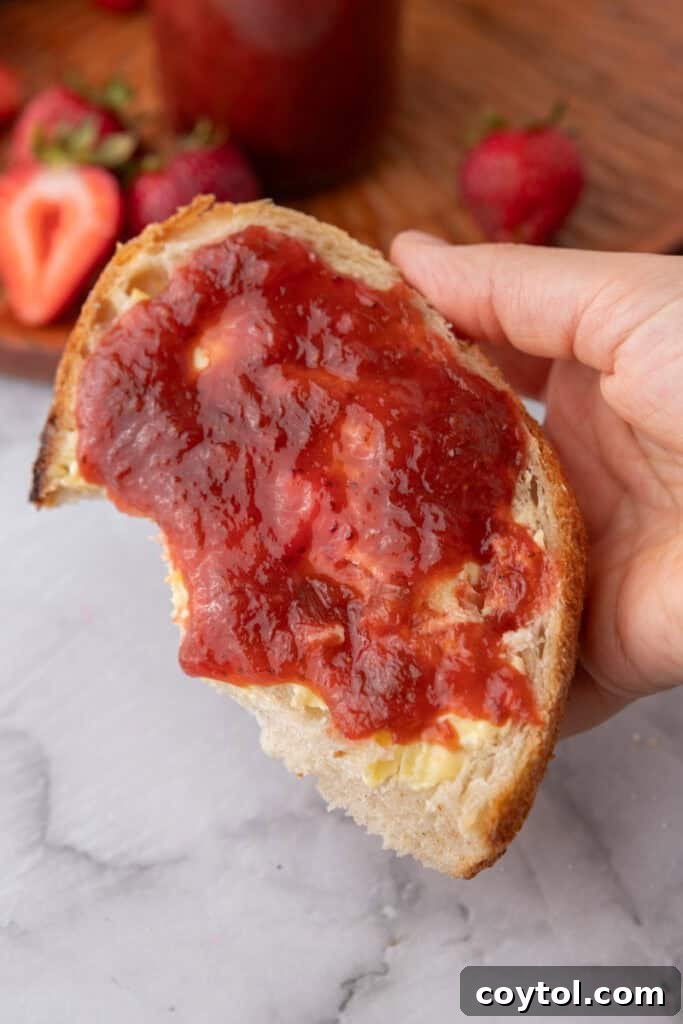
- Spread over a slice of sourdough croissant bread, classic toast, or warm biscuits with salted butter.
- As the perfect filling for a classic peanut butter and jam sandwich.
- Layered into a strawberry shortcake or used as a pastry filling.
- Stirred into yogurt, oatmeal, or a chia pudding for a fruity boost.
- Swirled into homemade vanilla bean ice cream for a delightful dessert.
- Used as a glaze for pork or chicken, or incorporated into salad dressings for a sweet-tart note.
Strawberry Rhubarb Jam Recipe
Homemade strawberry rhubarb jam made without pectin. Sweet, tart, and simple to prepare, this jam is perfect for breakfast, snacks, or gifting.
Print Recipe
Ingredients
- 3 cups fresh or frozen strawberries, hulled and chopped
- 3 cups fresh or frozen rhubarb, chopped
- 1 & 1/2 cup granulated sugar
- a pinch of salt
- 2 tablespoon lemon juice
- Optional: 1 teaspoon vanilla extract
Instructions
- Toss the strawberries, rhubarb, sugar, salt, and lemon juice into a medium saucepan. Give it a quick stir and let it sit for about 10–15 minutes. This helps draw out all the juices naturally before we even turn on the heat.
- Place the pan over medium heat and bring the mixture to a gentle boil. Reduce to a simmer and let it cook for 20–25 minutes, stirring often. It’ll start out watery but thicken up beautifully as the fruit breaks down and the sugars concentrate.
- If you’re fancy, you can do the “wrinkle test”: place a small spoonful of jam on a cold plate, wait a minute, and push it with your finger. If it wrinkles, you’re golden. If not, keep simmering a little longer. (Or you can just eyeball it like I usually do.)
- Remove from the heat and add the vanilla extract if using.
- Use a potato masher for a chunkier texture or a quick blitz with an immersion blender if you want it more jammy and spreadable. Totally your call.
- Let the jam cool slightly, then transfer it to a clean jar or container. It’ll thicken more as it cools. Store in the fridge for up to 3 weeks.
Notes
Storage Ideas Based on Yield:
- Fill about 3–4 small 8 oz jars (half-pint mason jars)
- Or store in 1 large 16 oz jar + 1 smaller jar
*Calories calculated based off of 2 tablespoon servings
Nutrition
Calories: 55 Calories | Carbohydrates: 14g | Protein: 0.3g | Fat: 0.1g | Saturated Fat: 0.01g | Polyunsaturated Fat: 0.04g | Monounsaturated Fat: 0.01g | Sodium: 1mg | Potassium: 70mg | Fiber: 1g | Sugar: 13g | Vitamin A: 17IU | Vitamin C: 12mg | Calcium: 16mg | Iron: 0.1mg
Nutrition information is automatically calculated, so should only be used as an approximation.
Conclusion: Savor the Flavor of Homemade Goodness
Making your own strawberry rhubarb jam is a rewarding experience that fills your home with incredible aromas and your pantry with deliciousness. This no-pectin recipe simplifies the process, allowing the natural flavors of spring’s best produce to shine through. From its vibrant color to its perfect balance of sweet and tart, this homemade jam is a testament to the joy of cooking from scratch.
Whether you’re spreading it on your morning toast, adding it to a culinary creation, or sharing it as a thoughtful gift, each spoonful tells a story of care and natural goodness. So, gather your fresh strawberries and rhubarb, and embark on this delightful jam-making adventure. You’ll be glad you did!