
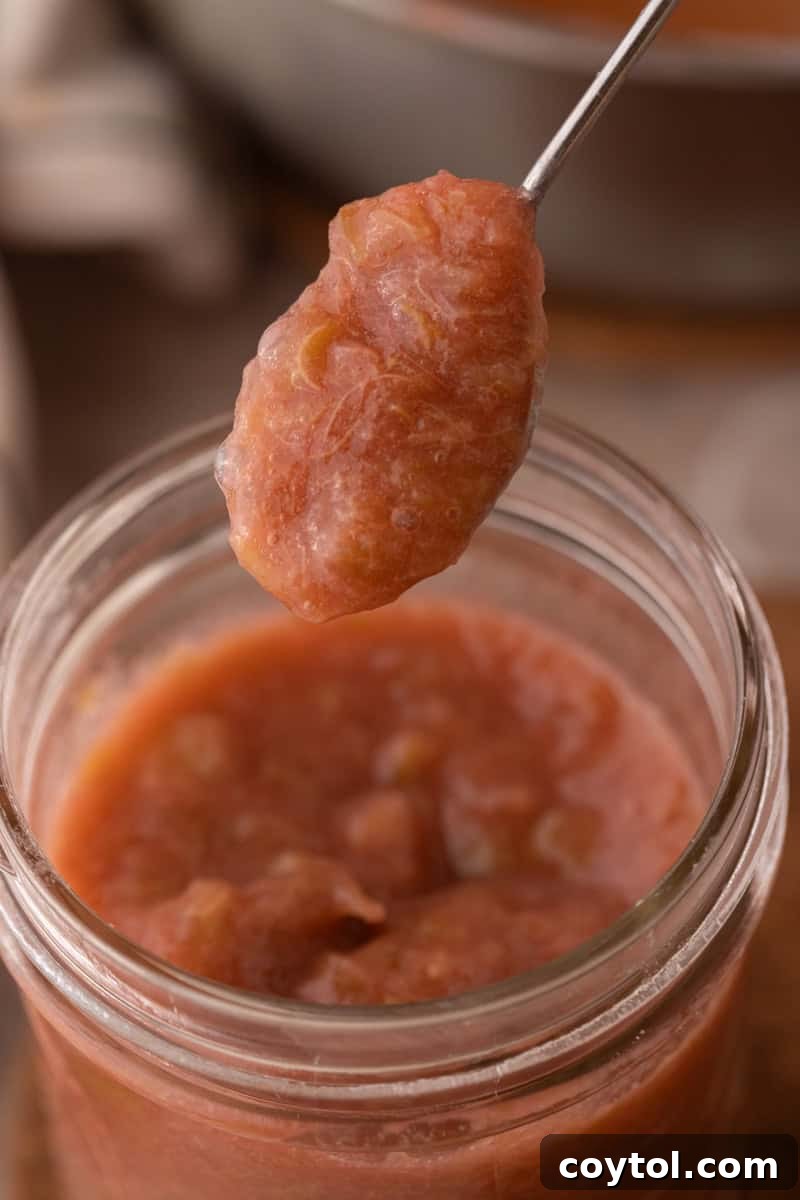
The Best Homemade Rhubarb Sauce Recipe
Unlock the vibrant flavors of spring and early summer with this incredibly easy homemade rhubarb sauce recipe! Crafted with just a handful of simple ingredients, this sweet and tangy compote transforms ordinary rhubarb stalks into a truly versatile and delicious fruit topping. Whether you’re a seasoned rhubarb enthusiast or new to its unique taste, this recipe is designed to be effortless, yielding a perfect sauce every time. Spoon it generously over creamy vanilla ice cream, delicate pound cake, airy angel food cake, or swirl it into your morning yogurt or oatmeal for a burst of seasonal goodness. It’s truly that exceptional!
If you’ve been searching for simple yet spectacular rhubarb recipes, look no further – you’ve found your new favorite! After recently sharing my cherished family recipe for Grandma’s Strawberry Rhubarb Jam without Pectin, I still had a bounty of vibrant red and green rhubarb stalks tucked away in the freezer. Thanks to the glorious late spring and early summer rhubarb season, I decided to put it to its most versatile use: a low-effort, incredibly adaptable fruit compote that complements virtually any dish. This homemade rhubarb sauce is a game-changer, offering a delightful balance of sweet and tart flavors with minimal fuss. Trust me, any rhubarb lover will be absolutely smitten with this bright, flavorful sauce.
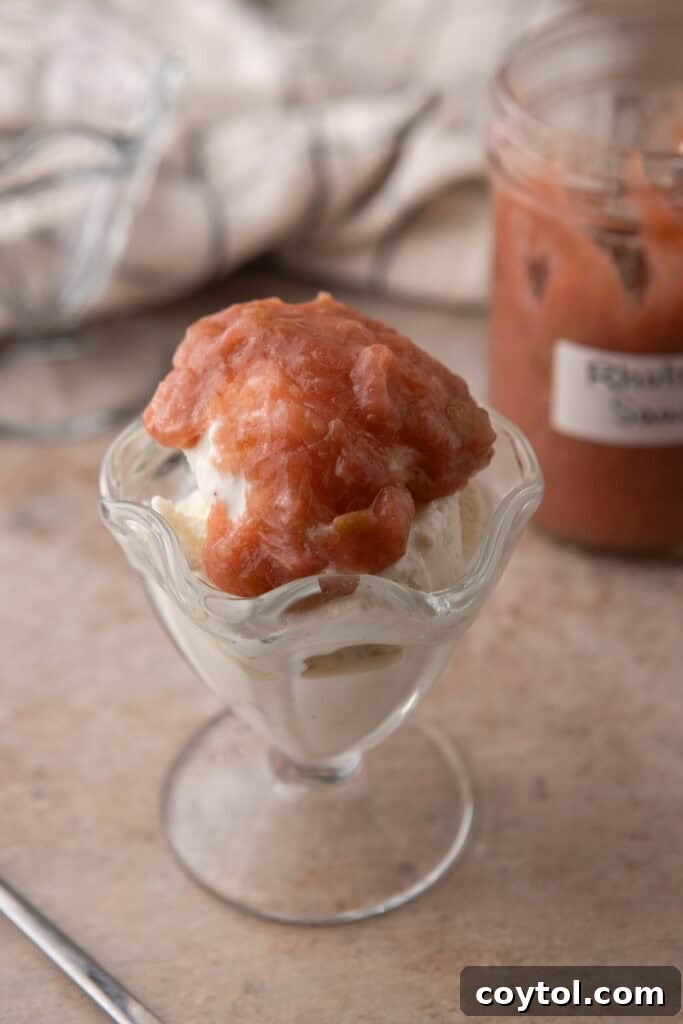
One of the fantastic aspects of this recipe is its flexibility. If you’re mindful of your sugar intake or calorie count, this tangy sauce can be easily prepared with alternative sweeteners like monk fruit or a stevia-based option. I’ve enjoyed it the classic way for years, but opting for a sugar substitute this time proved to be just as delicious, maintaining all the wonderful flavor without compromise. This adaptability makes it a perfect addition to a variety of dietary needs, ensuring everyone can savor the delightful taste of homemade rhubarb sauce.
While you’re here exploring delicious treats, don’t miss out on these other fantastic recipes: this refreshing Lemon Strawberry Vegan Tart, wholesome Healthy & Vegan Chocolate Hazelnut Bars, or the popular Crumbl Strawberry Pop Tart Cookies. They’re perfect for expanding your repertoire of homemade delights!
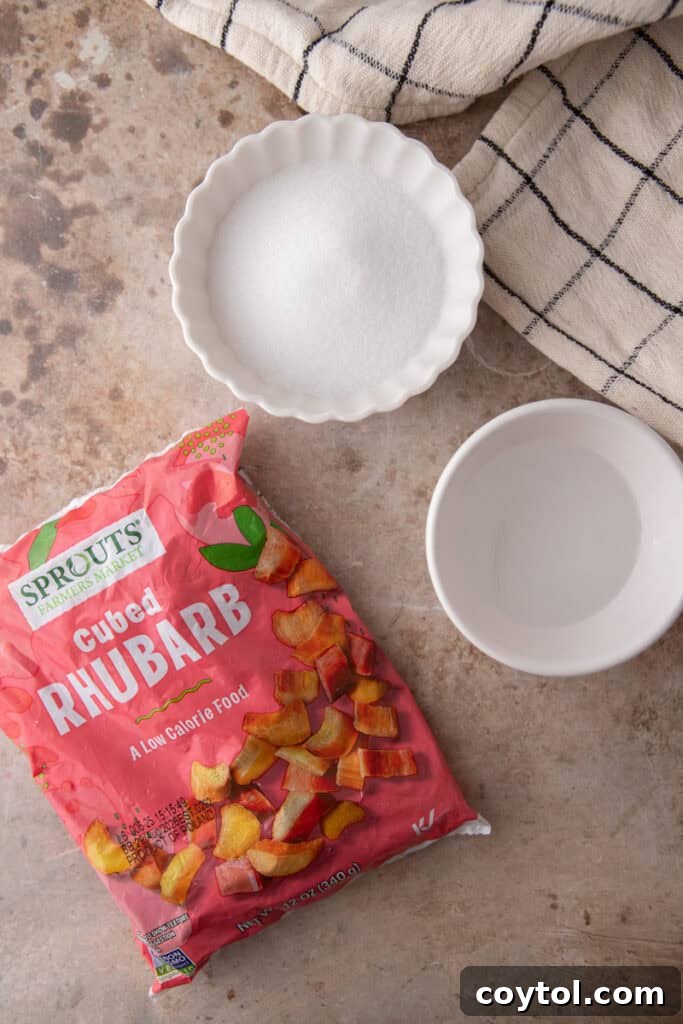
Essential Ingredients for the Best Rhubarb Sauce
Creating this simple rhubarb compote requires just a few pantry staples. Each ingredient plays a crucial role in developing the perfect sweet and tangy flavor profile. Below is a detailed look at what you’ll need; for exact measurements, please refer to the comprehensive recipe card at the end of this article.
- Fresh or Frozen Rhubarb: The star of our show! Rhubarb brings a unique tartness that’s characteristic of this delightful sauce. Whether you use fresh, vibrant stalks from your garden or a bag of frozen rhubarb from your freezer, both work wonderfully. Frozen rhubarb often yields a slightly smoother sauce due to its cellular structure breaking down during freezing, but fresh provides that authentic garden-to-table experience.
- Granulated Sugar: This is key to balancing rhubarb’s natural tartness, transforming it into a sweet and tangy delicacy. You can adjust the amount to suit your personal preference, making it sweeter for desserts or slightly less sweet for a more tart breakfast topping. As mentioned, feel free to use sugar substitutes like monk fruit or stevia if you’re watching your sugar intake.
- Water: A small amount of water helps to create that desired syrupy consistency, preventing the rhubarb from sticking to the pan and aiding in its breakdown. It forms the base of the light syrup that coats the cooked rhubarb, ensuring a smooth and luscious texture.
- A Pinch of Salt: Often overlooked in sweet recipes, a tiny pinch of salt is a secret weapon that truly elevates the flavor. It enhances the sweetness of the sugar and brightens the overall profile of the rhubarb, preventing the sauce from tasting flat. Don’t skip this subtle but impactful ingredient!
Step-by-Step Guide: How to Make Homemade Rhubarb Sauce
Making this homemade rhubarb sauce is incredibly straightforward, perfect for cooks of all skill levels. Follow these simple steps to create a rich, flavorful compote that you’ll want to put on everything. For the complete, detailed recipe instructions, scroll down to the recipe card below.
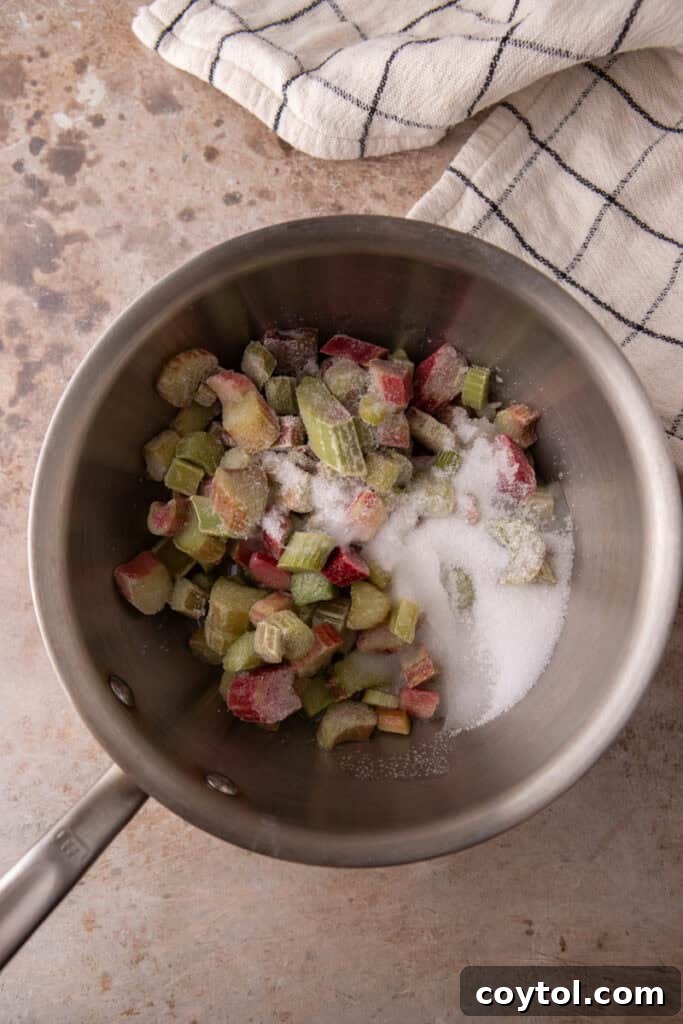
- Combine Ingredients: Begin by adding your chopped raw rhubarb pieces, granulated sugar, water, and a pinch of salt to a medium-sized saucepan. It’s helpful to use a non-reactive pan, like stainless steel, to prevent any metallic flavors from reacting with the tart rhubarb.
- Allow to Macerate (Optional but Recommended): Gently stir all the ingredients together. If using frozen rhubarb, or if you have a few extra minutes, let the mixture sit for about 5-10 minutes. This brief resting period allows the sugar to begin drawing out the natural juices from the rhubarb, creating a foundational syrup that will contribute to a more flavorful and cohesive sauce. This step is particularly beneficial for frozen rhubarb as it helps it soften before cooking.
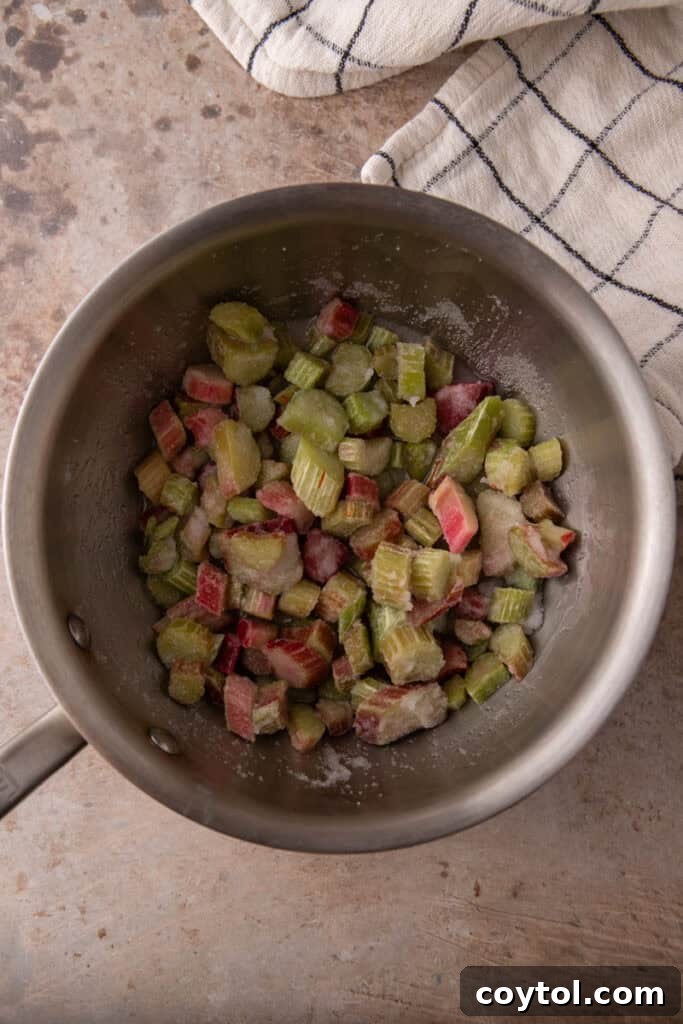
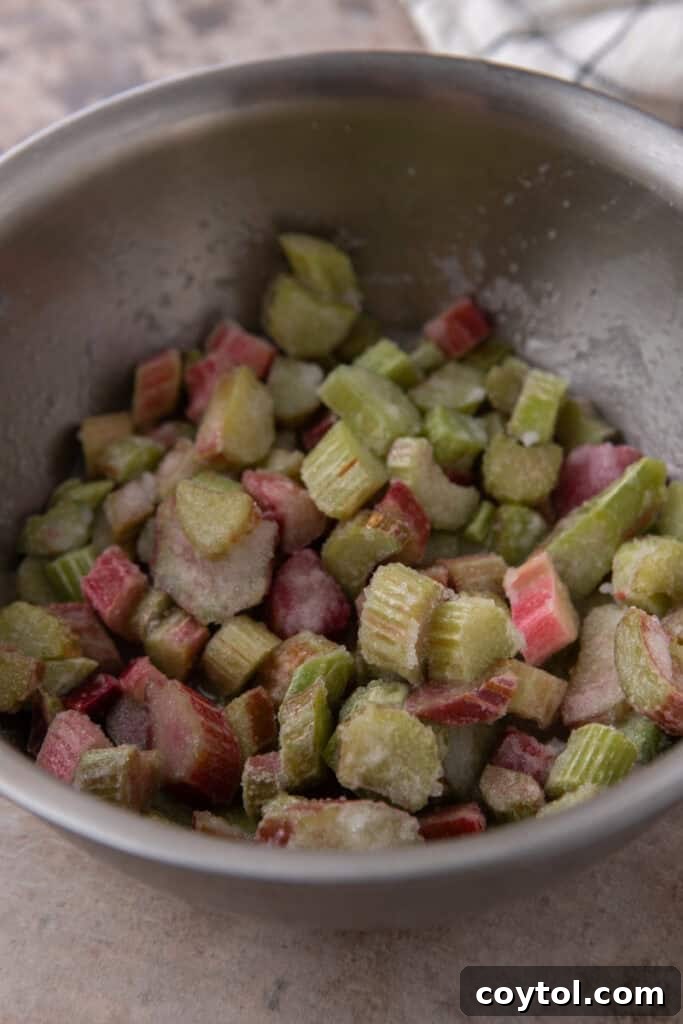
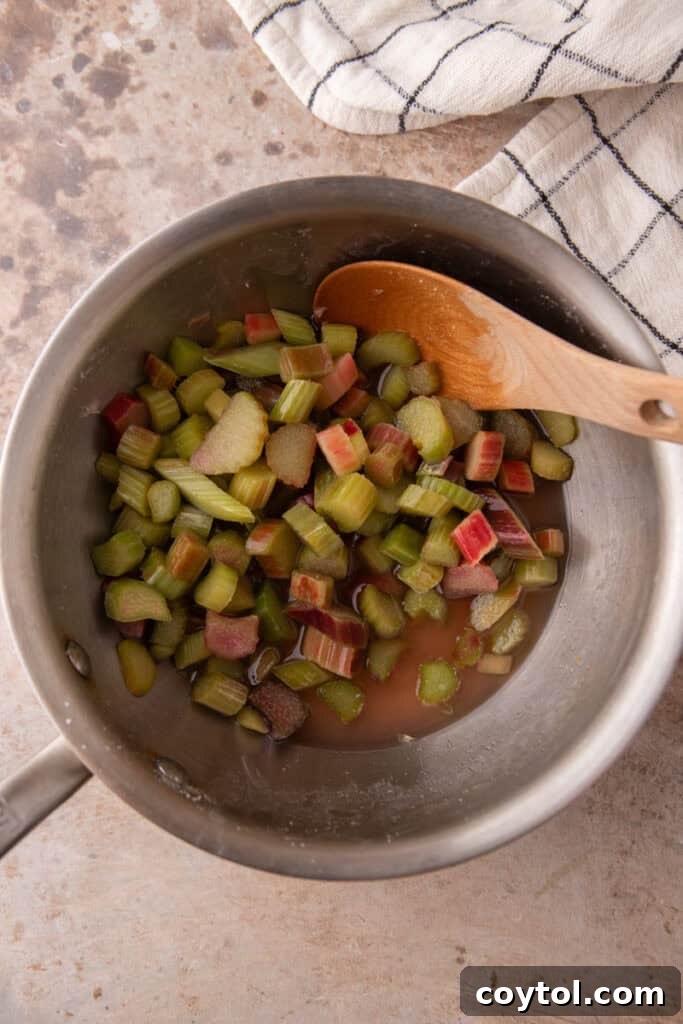
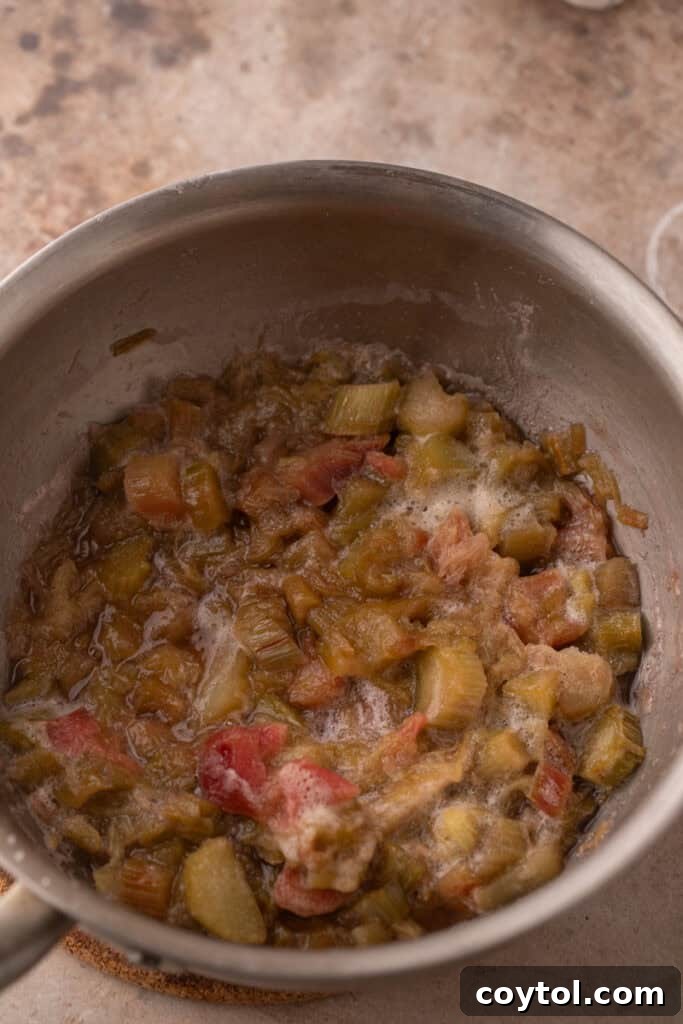
- Simmer to Perfection: Place the saucepan over medium heat. Bring the mixture to a gentle simmer, then reduce the heat slightly to maintain a steady, low boil. Cook for about 10-15 minutes, stirring occasionally to prevent any sticking or scorching at the bottom of the pan. During this time, the rhubarb will soften significantly and begin to break down, releasing its vibrant color and characteristic tart aroma. The sauce will gradually thicken as the water evaporates and the sugar melts.
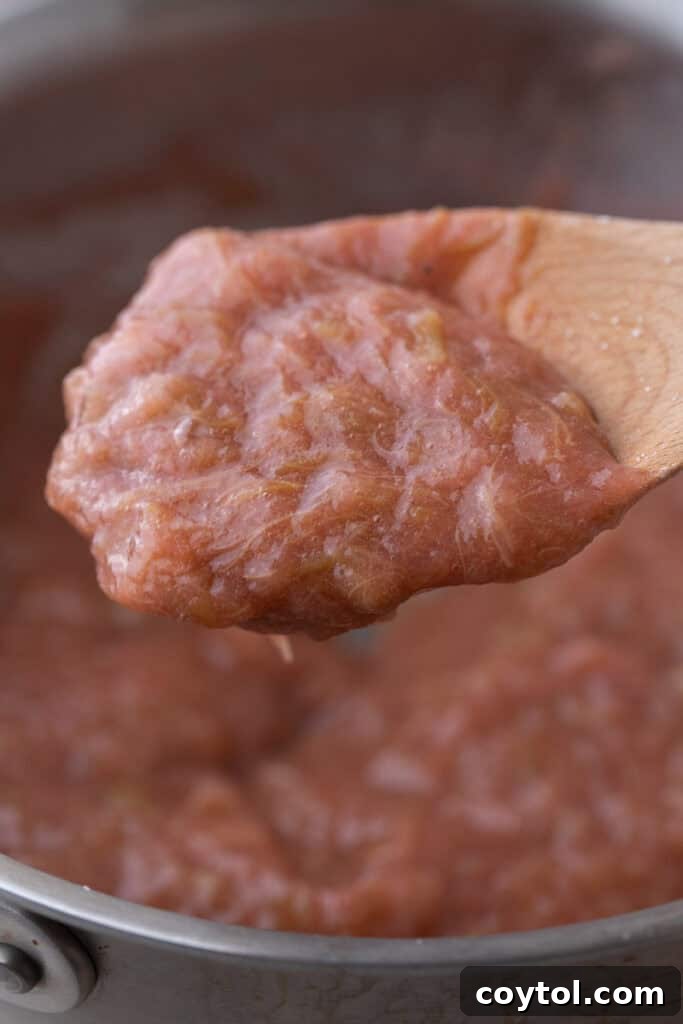
- Achieve Desired Consistency: Once the rhubarb has completely softened and the sauce has thickened to your liking, remove it from the heat. For a rustic, chunky sauce with delightful textural variation, you can serve it as is. If you prefer a perfectly smooth, velvety sauce, use an immersion blender directly in the saucepan to blend until silky. Alternatively, carefully transfer the warm sauce to a food processor or regular blender and process until smooth. Allow the sauce to cool completely before transferring it to an airtight container. Store it in the refrigerator for future enjoyment.
Expert Tips for the Perfect Sweet and Tangy Rhubarb Sauce
- Chop Rhubarb Evenly: For consistent cooking and optimal texture, aim to chop your rhubarb stalks into uniform 1-inch pieces using a sharp knife. This ensures that all pieces cook down at roughly the same rate, preventing some from being too firm while others are mushy.
- Stir Occasionally During Simmering: While the sauce is simmering, give it a gentle stir every few minutes. This simple action prevents the rhubarb from sticking to the bottom of the saucepan and scorching, ensuring an even cook and a clean, fresh flavor.
- Adjust Sweetness to Your Liking: Rhubarb’s tartness can vary, and personal preference for sweetness differs greatly. Taste the sauce as it cooks and once it’s off the heat. If your rhubarb is exceptionally tart, or if you desire a sweeter, more dessert-like sauce, don’t hesitate to add a little extra sugar, a teaspoon at a time, until it reaches your perfect balance. Remember, you can always add more sugar, but you can’t take it away!
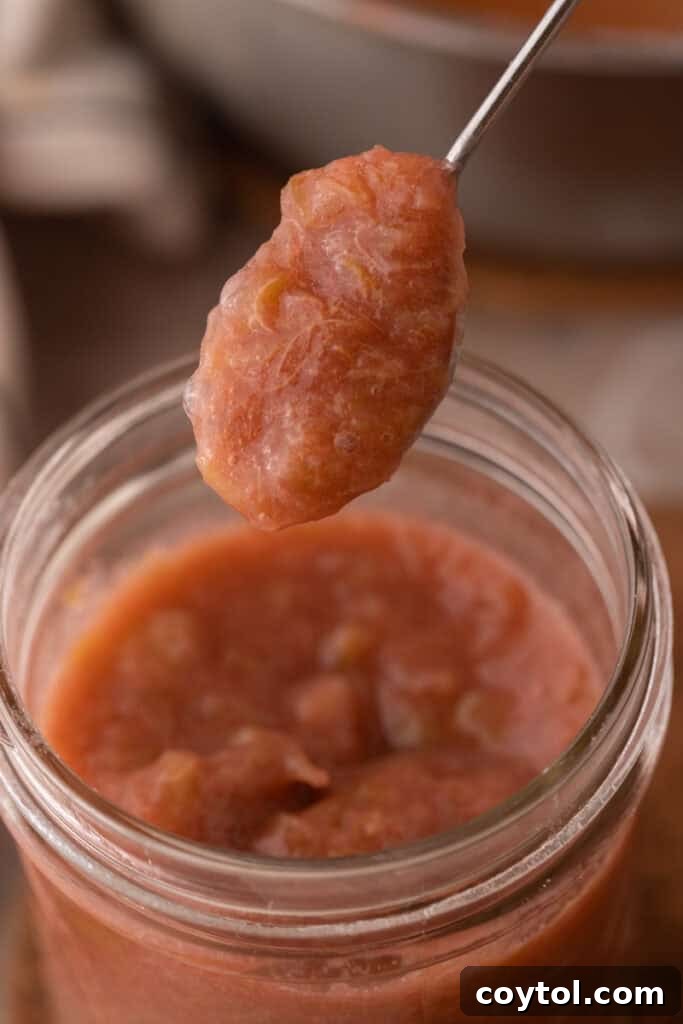
- Experiment with Consistency: Do you prefer a chunky, rustic sauce or one that’s silky smooth? This recipe is adaptable! For a smooth finish, use an immersion blender or food processor after cooking. If you like more texture, simply mash the rhubarb gently with a fork against the side of the pot as it simmers, or leave it as is for distinct pieces.
- Serve Warm or Chilled: This homemade rhubarb sauce is wonderfully versatile and delicious at any temperature. Enjoy it warm over a bowl of oatmeal or pancakes for a comforting breakfast. Keep it chilled to spoon over ice cream, yogurt, or cold desserts. It’s even delightful served at room temperature, making it ideal for buffet spreads or picnics.
- Add a Hint of Flavor: For an extra layer of complexity, consider adding a tiny splash of vanilla extract after the sauce has finished cooking, or a pinch of ground cinnamon or ginger to the pot with the rhubarb and sugar. Lemon zest or orange zest can also brighten the flavors beautifully.
Why You Need to Make This Easy Rhubarb Sauce Recipe
If you’re still contemplating whether to whip up a batch of this delightful rhubarb sauce, here are compelling reasons why it should be your next kitchen project:
- Ridiculously Easy to Make: Seriously, it couldn’t be simpler! With just three core ingredients (rhubarb, sugar, water) and minimal steps—chop, simmer, and stir—you’ll have a gourmet-quality sauce ready in under 20 minutes. It’s the perfect recipe for beginners or anyone looking for a quick and rewarding cooking experience.
- Super Versatile and Adaptable: This isn’t just a dessert topping. Its balanced sweet and tart profile makes it one of the best ways to utilize rhubarb in a myriad of dishes. Enjoy it for a decadent breakfast, a refreshing dessert accompaniment, or even as a surprising tangy element in savory meals. The possibilities are endless!
- Conveniently Freezer-Friendly: Rhubarb season is fleeting, but your enjoyment of this delicious sauce doesn’t have to be. Make a large batch when rhubarb is plentiful, and freeze portions for year-round enjoyment. It thaws beautifully, allowing you to savor the taste of spring and summer anytime.
- Infinitely Customizable: This recipe serves as a fantastic base. You have full control to tailor it to your preferences. Make it sweeter or tangier by adjusting sugar, chunky or smooth by blending. Get creative by adding other fruits, spices, or citrus zests for unique flavor variations. It’s a blank canvas for your culinary imagination!
- Healthy and Nutritious: Rhubarb is packed with fiber, Vitamin K, and antioxidants. While sugar is added for balance, the sauce retains many of these nutritional benefits. Plus, the option to use natural sweeteners makes it a healthier alternative to many store-bought fruit toppings.
Frequently Asked Questions About Rhubarb Sauce
Here are some common questions about making and enjoying homemade rhubarb sauce:
How long does this homemade sauce last in the fridge?
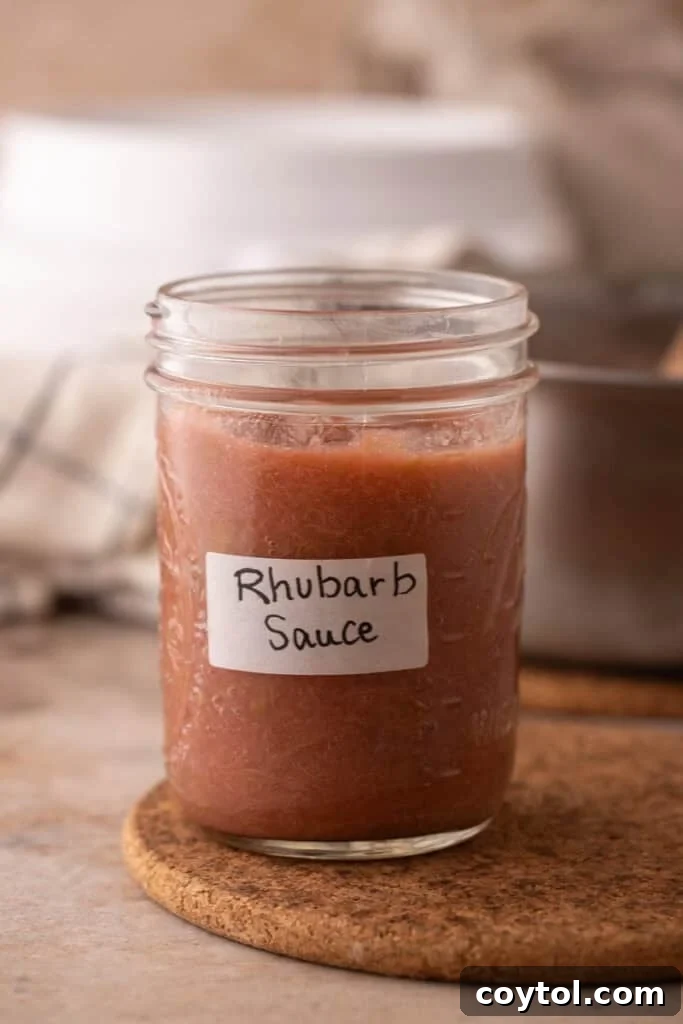
Once prepared and cooled, your delicious rhubarb compote can be stored in an airtight container, such as a sealed mason jar, in the refrigerator for up to 1 week. Always ensure it’s properly sealed to maintain freshness and prevent it from absorbing other odors from the fridge. It’s also an excellent candidate for freezing for longer-term storage.
Can I freeze this rhubarb sauce recipe?
Absolutely, freezing is a fantastic way to preserve this sauce! After cooking, allow the rhubarb sauce to cool completely to room temperature. Then, transfer it to freezer-safe containers or sturdy small Ziploc bags, pressing out any excess air. It can be frozen for up to 3 months. When you’re ready to use it, simply thaw it in the refrigerator overnight, then gently reheat on the stovetop if desired, or use chilled.
Do I need to peel the rhubarb stalks before using them?
No peeling is required for rhubarb stalks, which makes this recipe even easier! Simply give them a good wash, trim off any tough ends, and chop them into uniform pieces. The skin of the rhubarb, along with its fibrous chunks, breaks down beautifully during the cooking process. Furthermore, the skin contributes significantly to the gorgeous, rich pink color of the finished sauce, adding visual appeal without any extra effort.
Can I use frozen rhubarb to make this rhubarb sauce recipe?
Yes, absolutely! Frozen rhubarb works just as effectively as fresh rhubarb for this sauce. I often use frozen rhubarb myself, and the best part is you don’t even need to thaw it beforehand. Simply add the frozen rhubarb directly to the pot with the other ingredients and simmer as directed. You might find it needs a couple of extra minutes of cooking time to fully soften, but it won’t be a significant difference. It’s a perfect solution for enjoying rhubarb sauce any time of year!
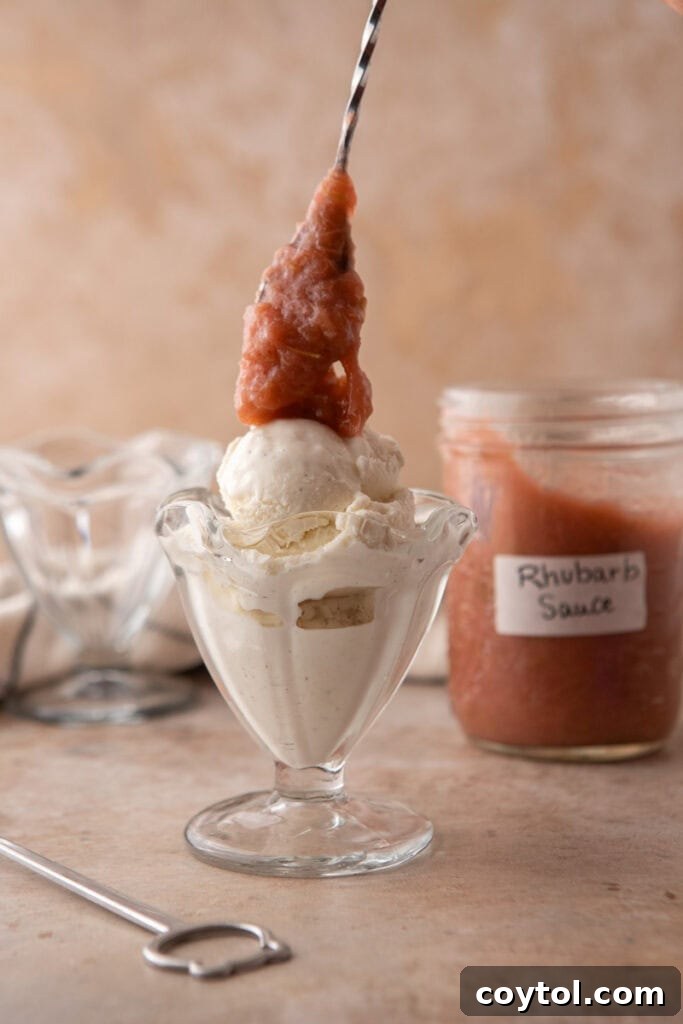
Is rhubarb sauce supposed to be sweet or tart?
The beauty of a perfectly made rhubarb sauce lies in its ideal balance of both sweet and tart flavors! Rhubarb inherently possesses a distinct tart and tangy profile. The granulated sugar added in this recipe is crucial for mellowing out that intense tartness, creating a harmonious and incredibly delicious taste. However, the goal isn’t to make it overly sweet, but rather to complement and highlight rhubarb’s unique character. You have the freedom to adjust the sugar amount to your exact preference, allowing you to achieve a sauce that’s either predominantly tart with a hint of sweetness, or sweeter with a pleasant tangy finish.
What can I serve rhubarb with?
This rhubarb sauce is incredibly versatile, making it a fantastic accompaniment for a wide array of dishes. Here are just a few delicious ideas:
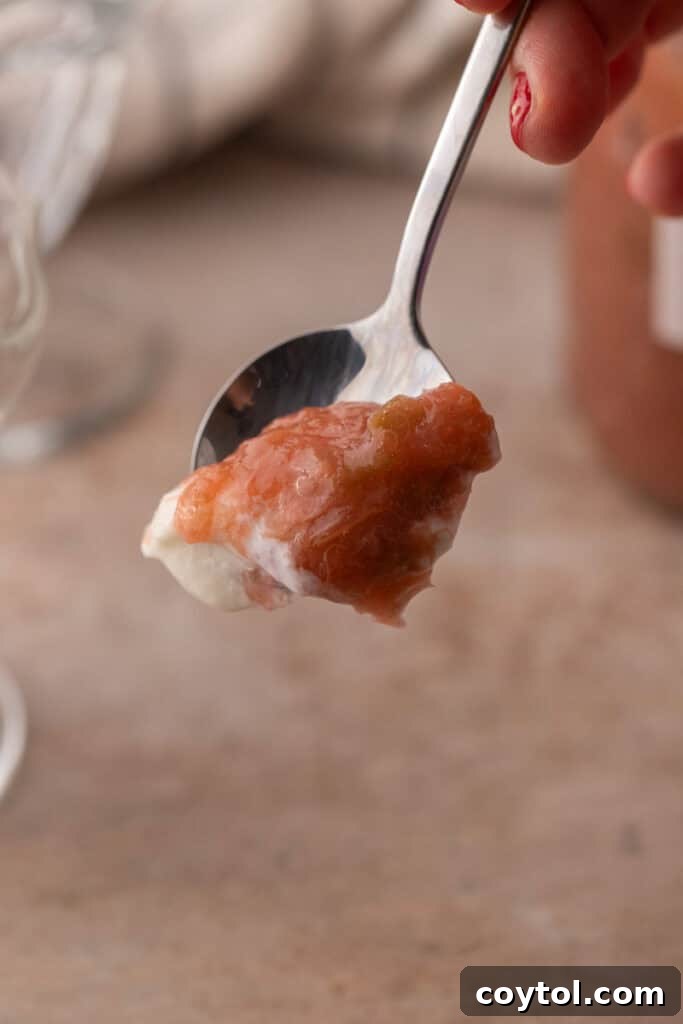
- Desserts: Spoon it warm or cold over a scoop of vanilla ice cream, custard, or panna cotta. It’s also divine on cheesecake, pavlova, shortcakes, or as a filling for rhubarb crisps and crumbles.
- Breakfast & Brunch: Elevate your morning meal by drizzling it over fluffy pancakes, golden waffles, French toast, or warm oatmeal. Swirl it into plain Greek yogurt or cottage cheese for a healthy and flavorful start to your day. It also makes an excellent spread on toast or scones.
- Baked Goods: Use it as a vibrant filling for tarts, hand pies, or as a topping for plain cakes like pound cake or angel food cake. It can even be folded into muffin batter or used as a glaze for pastries.
- Savory Pairings: Don’t limit it to sweet dishes! The tartness of rhubarb sauce pairs surprisingly well with savory meats. Try serving it alongside roasted chicken, grilled pork chops, or even duck breast for a gourmet touch. Its bright flavor cuts through the richness of meats beautifully.
Can I add other fruits like strawberries or apples?
Absolutely! This rhubarb sauce recipe is a wonderful foundation for creating various fruit compote variations. Rhubarb has a natural affinity for other fruits, especially berries. Combining rhubarb with sweet strawberries, crisp apples, or juicy raspberries creates different flavored fruit sauces that are equally delightful. To experiment, you can substitute about 1/2 to 1 cup of another fruit for a portion of the rhubarb while cooking. For an extra burst of aromatic flavor, try adding a generous amount of fresh orange zest or lemon zest to the pot during simmering. These simple additions can completely transform the sauce, offering new and exciting taste experiences.
Rhubarb Sauce Recipe
5 mins
15 mins
20 mins
6 servings
Print Recipe
Ingredients
- 12 oz fresh or frozen rhubarb (approx. 2½ cups chopped)
- 1/4 cup water
- 1/2 cup granulated sugar
- Pinch of salt (optional, but enhances flavor)
Instructions
-
Add the chopped rhubarb (fresh or frozen), pinch of salt, water, and granulated sugar to a medium saucepan. Stir to combine. For best results, let the mixture sit for 5–10 minutes, especially if using frozen rhubarb, to help the sugar draw out liquid and soften the fruit.
-
Place the saucepan over medium heat and bring to a gentle simmer. Reduce the heat slightly and continue to simmer for 10–15 minutes, stirring occasionally. Cook until the rhubarb breaks down into a soft, saucy consistency and the sauce thickens to your liking.
-
Remove from heat. For a smooth sauce, blend with an immersion blender or transfer to a food processor and blend until silky. Serve warm or chilled. Store any leftovers in an airtight container in the refrigerator for up to 1 week, or freeze for longer storage.
Nutrition
Carbohydrates: 19g |
Protein: 1g |
Fat: 0.2g |
Saturated Fat: 0.03g |
Polyunsaturated Fat: 0.1g |
Monounsaturated Fat: 0.02g |
Sodium: 3mg |
Potassium: 164mg |
Fiber: 1g |
Sugar: 17g |
Vitamin A: 58IU |
Vitamin C: 5mg |
Calcium: 49mg |
Iron: 0.1mg
Nutrition information is automatically calculated and should only be used as an approximation.
Enjoyed this recipe? Leave a comment below!