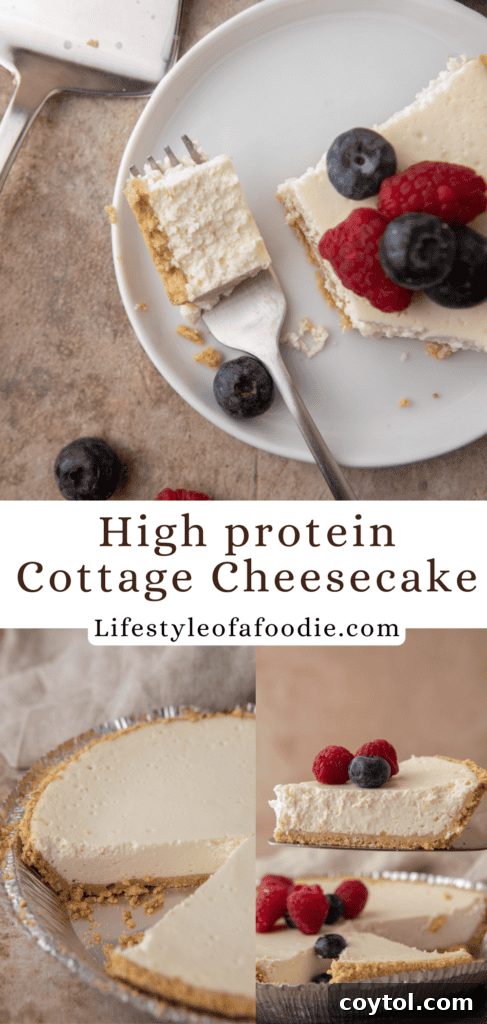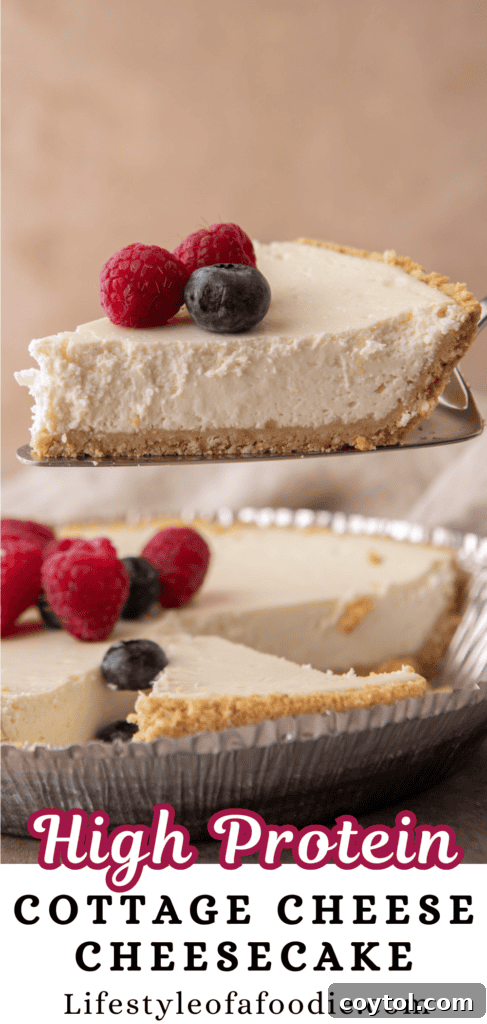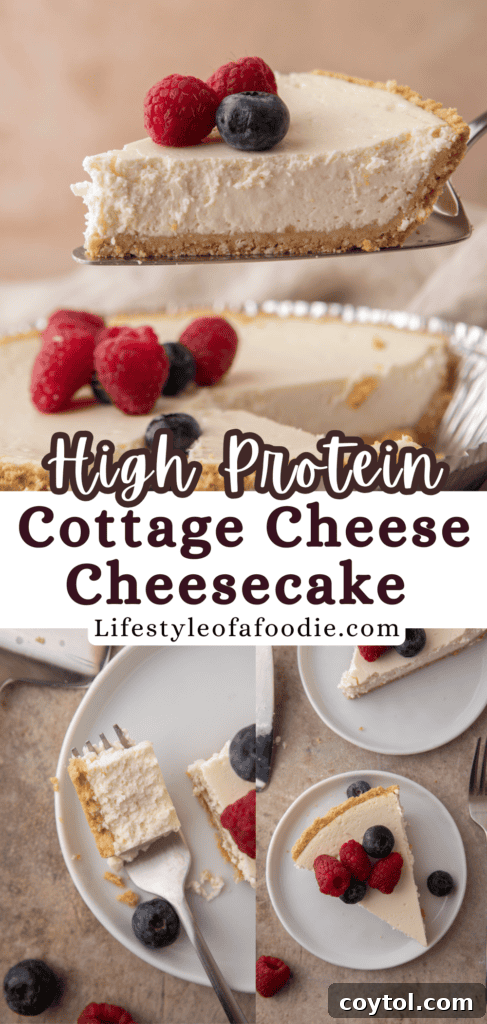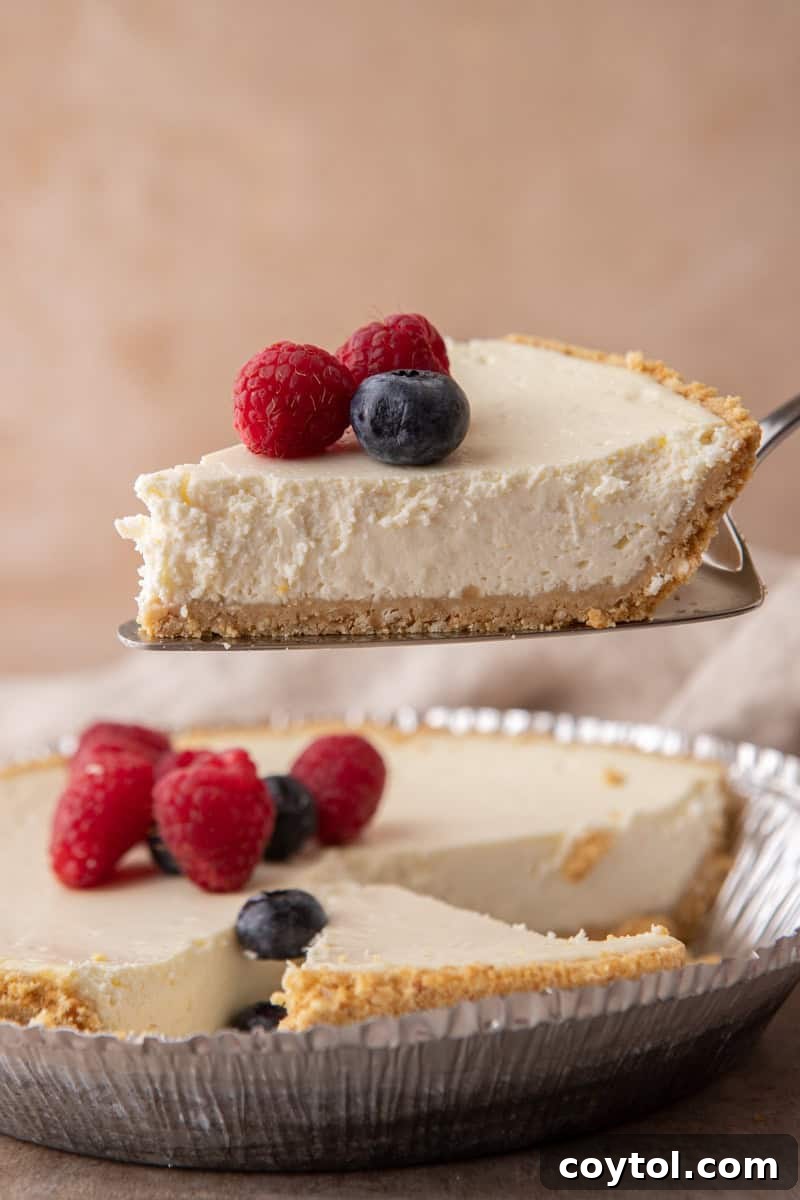
Discover the ultimate guilt-free indulgence with this High Protein Cottage Cheese Cheesecake recipe. Crafted from a handful of wholesome ingredients, this creamy, delicious dessert is engineered to align perfectly with your fitness aspirations without compromising on taste. Forget the protein powder; this treat naturally delivers a powerful protein punch, making it a true game-changer for healthy eaters and dessert lovers alike.
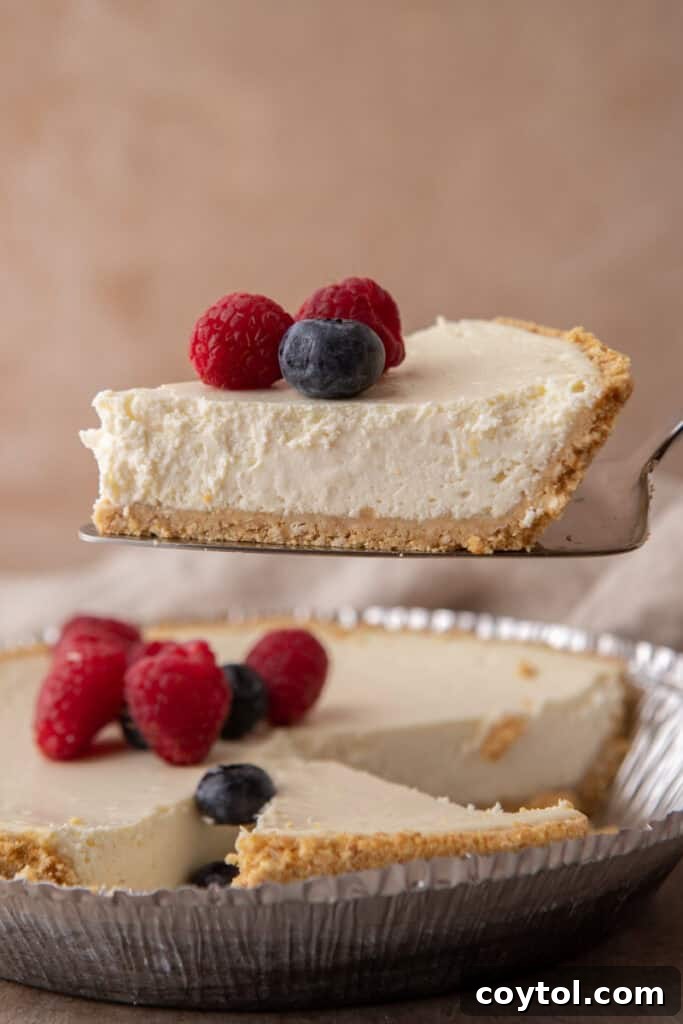
Have you ever dreamed of a dessert that genuinely satisfies your sweet tooth while actively supporting your health and fitness journey? This High Protein Cottage Cheese Cheesecake is precisely that dream realized. Its luxuriously creamy texture and delightfully sweet flavor rival any traditional cheesecake made with high-fat cream cheese, offering a healthier, protein-packed alternative. Best of all, this incredible recipe requires no special culinary expertise or fancy equipment. It’s an effortlessly easy-to-make dessert, perfect for integrating into your meal plan as a smart, satisfying treat.
Whether you’re in search of a nourishing, protein-rich snack to fuel your day, a wholesome post-dinner indulgence, or a healthier dessert option to share at your next gathering, this cottage cheese cheesecake fits the bill perfectly. Its excellent refrigerator stability also makes it an ideal candidate for meal prepping, allowing you to have a delicious, nutritious treat readily available throughout the week. Serve it chilled to enhance its refreshing qualities, and elevate the experience with a topping of fresh seasonal fruit or a delicate drizzle of natural honey. Embrace this healthier dessert whenever those irresistible cravings strike, knowing you’re making a choice that benefits both your palate and your body.
If you’re already a fan of innovative and delicious cottage cheese recipes, you’re in for a treat! Don’t miss out on exploring other creative ways to incorporate this versatile ingredient into your diet. Be sure to check out our Cottage Cheese Edible Cookie Dough for a quick, no-bake delight, the refreshing High Protein Frozen Cottage Cheese Bark Recipe, or the viral sensation, this High Protein Cottage Cheese Queso Dip. Each recipe offers a unique and healthy spin on classic favorites, leveraging the incredible nutritional benefits of cottage cheese.
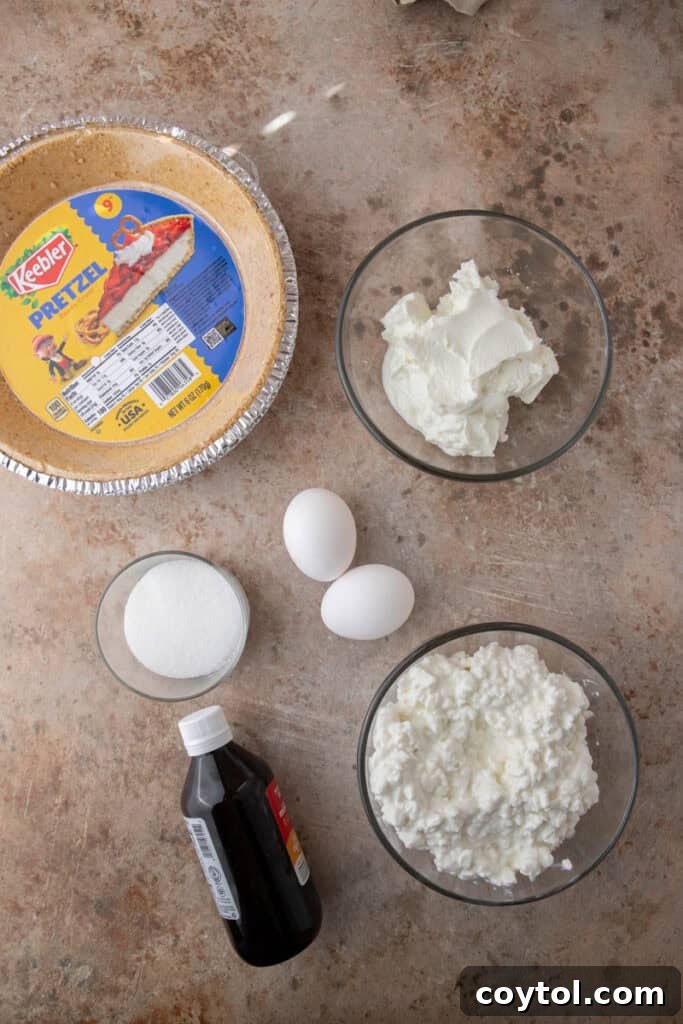
Essential Ingredients for Your High Protein Cottage Cheese Cheesecake
Crafting this healthy and decadent High Protein Cottage Cheese Cheesecake requires only a few accessible ingredients, each playing a crucial role in achieving its perfect flavor and texture. For precise measurements, please refer to the comprehensive recipe card located at the conclusion of this article. Here’s a detailed look at what you’ll need:
- Graham Cracker Pie Crust: This forms the essential flavorful and slightly crisp base of your cheesecake. You have the flexibility to either create a homemade crust using finely crushed graham cracker crumbs, your preferred low-calorie or sugar-free sweetener, and melted butter, or opt for the convenience of a store-bought 9-inch graham cracker crust. For a gluten-free variation, consider using a gluten-free graham cracker crust or a homemade crust made with almond flour and a touch of coconut oil.
- 1% Fat Cottage Cheese: The star ingredient! Low-fat cottage cheese is absolutely pivotal for the protein-rich, creamy filling that gives this cheesecake its unique healthy profile. While 1% is recommended for a lighter texture, you can experiment with 2% or even full-fat cottage cheese for a richer, denser result, though this will slightly alter the nutritional values. Ensure it’s pureed until completely smooth to avoid a grainy texture.
- Nonfat Greek Yogurt: This ingredient is key to elevating the cheesecake’s creamy consistency and contributes additional protein, enhancing the overall tanginess and depth of flavor. Unsweetened nonfat Greek yogurt is preferred to control the sugar content. If nonfat isn’t available, low-fat Greek yogurt can be a suitable substitute.
- Large Eggs: Eggs serve as the primary binding agent, providing structure and contributing to the silken, custard-like texture that defines a perfect cheesecake. Using eggs at room temperature is crucial as it helps them integrate more smoothly into the batter, preventing overmixing and potential cracks during baking.
- Monk Fruit Sweetener: A fantastic low-calorie alternative to sugar, monk fruit sweetener provides just the right amount of sweetness without adding unnecessary calories or impacting blood sugar levels. Its natural origin makes it a popular choice. However, you can easily substitute it with other granulated low-calorie sweeteners like erythritol or stevia, or even regular sugar if dietary restrictions are not a concern, adjusting quantities to match your desired sweetness.
- Vanilla Extract: Infuses the cheesecake with a warm, comforting, and subtly sweet aroma that is indispensable for any classic dessert. For an elevated flavor profile and visible flecks of vanilla, consider adding a touch of vanilla bean paste or scraping seeds from a fresh vanilla bean for the ultimate gourmet experience.
- Salt: A small pinch of salt is vital for balancing the sweetness and intensifying the other flavors, making each bite more complex and satisfying. Don’t skip this ingredient, as it truly enhances the overall taste profile.
- Lemon Zest: The inclusion of fresh lemon zest is a secret weapon, providing bright, aromatic hints of citrus that beautifully cut through the richness of the filling. This subtle addition is what truly mimics the beloved, refreshing taste of a traditional cheesecake, adding a layer of sophisticated flavor that will surprise and delight.
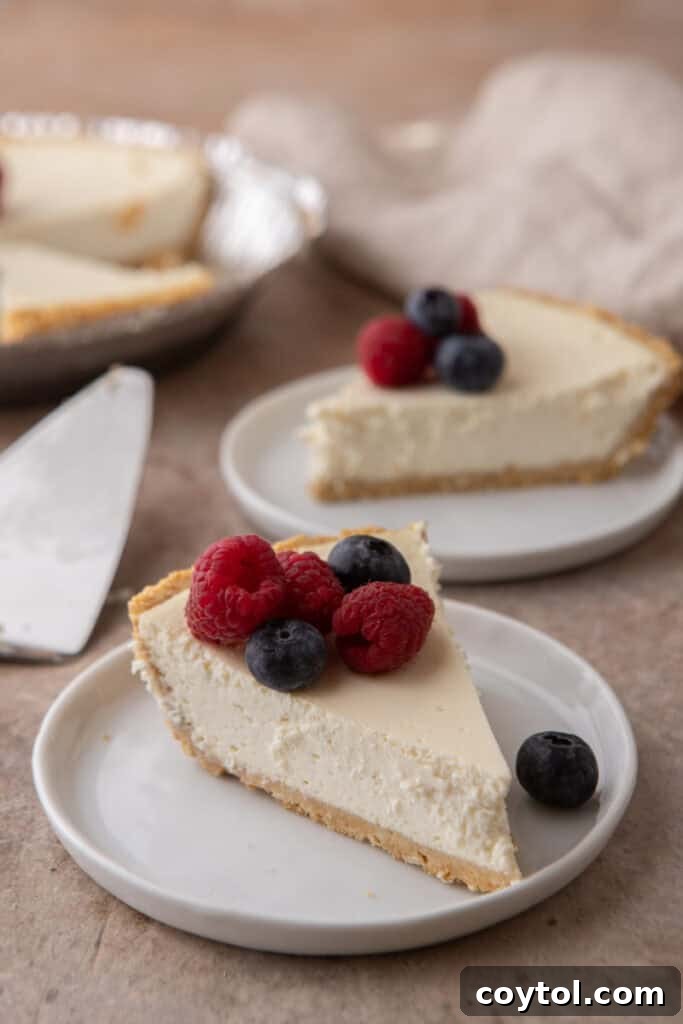
Step-by-Step Guide: How to Bake Your High Protein Cottage Cheese Cheesecake
Creating this delicious and healthy protein cheesecake is surprisingly simple. Follow these straightforward steps to achieve a perfectly creamy and satisfying dessert. For specific oven temperatures and a complete printable recipe, be sure to scroll down to the detailed recipe card at the end of this post.
- Prepare Your Oven: Begin by preheating your oven to 350°F (175°C). Allowing the oven to reach its optimal temperature before you start preparing the batter ensures an even bake from the moment the cheesecake enters the heat. This is a critical first step to prevent cracking.
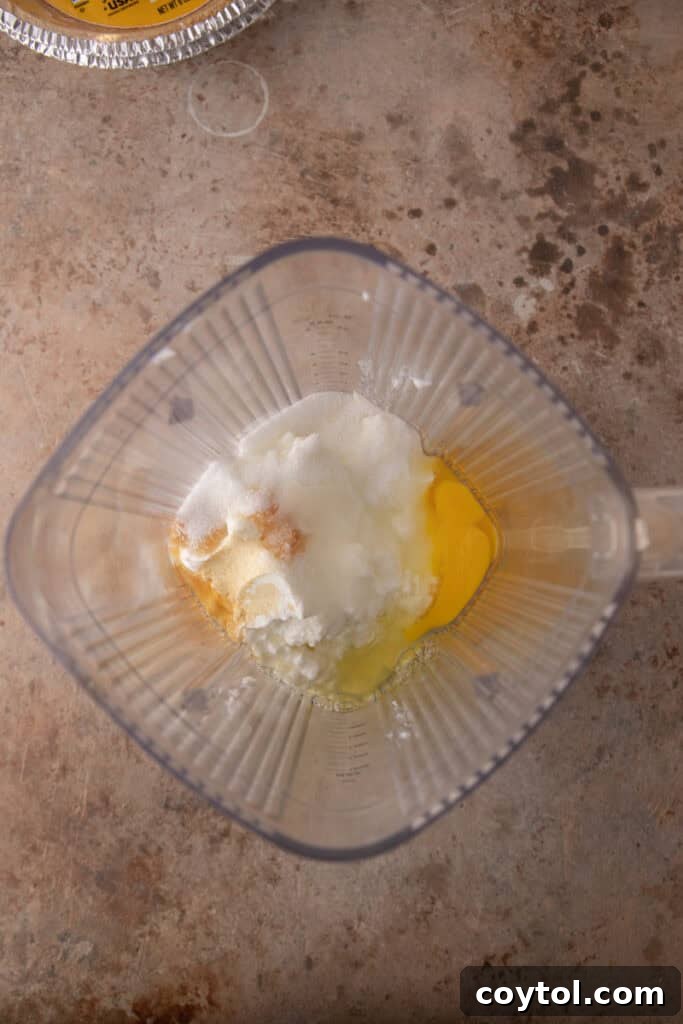
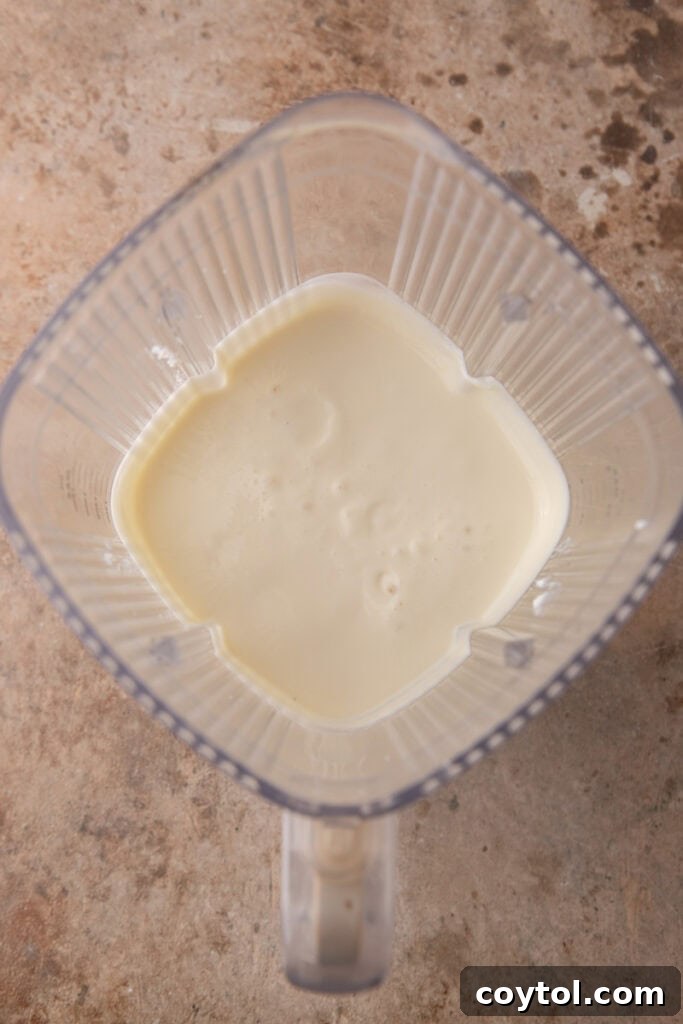
- Blend the Filling Ingredients: In a high-speed blender or a food processor, combine the room-temperature cottage cheese, Greek yogurt, large eggs, monk fruit sweetener, vanilla extract, and salt. Process these ingredients until the mixture is exceptionally smooth and completely free of lumps. The key to a silky cheesecake texture is thorough blending, ensuring no cottage cheese curds remain visible. Once blended, gently fold in the fresh lemon zest to distribute its vibrant citrus notes evenly throughout the batter.
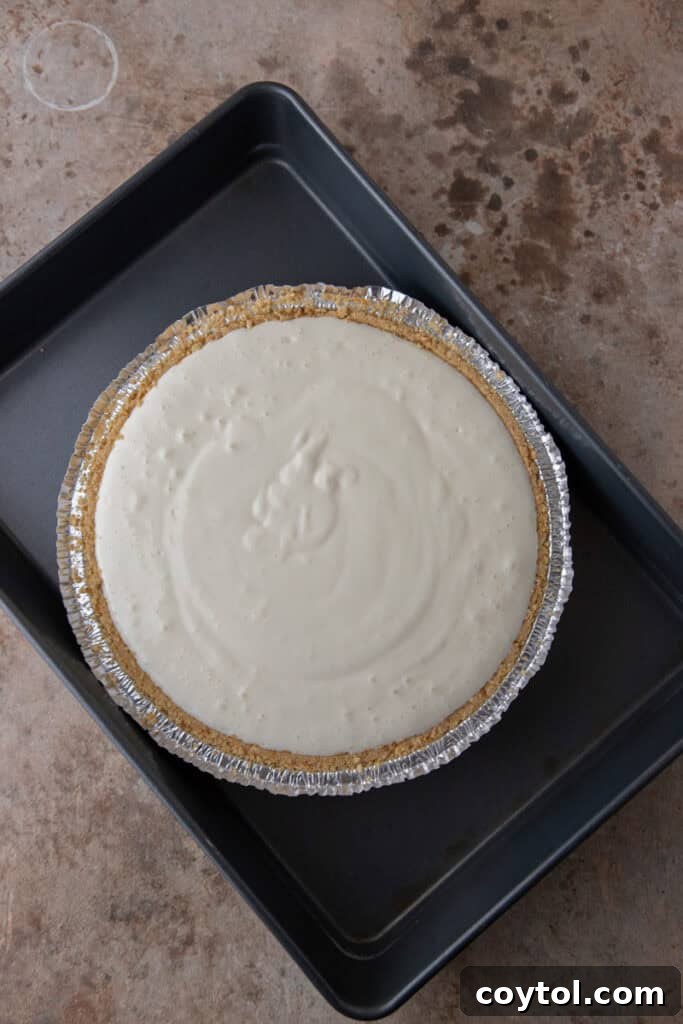
- Fill the Crust: Carefully pour the prepared, smooth cheesecake filling into your graham cracker pie crust. Gently spread the batter evenly across the crust using a spatula to ensure a uniform layer.
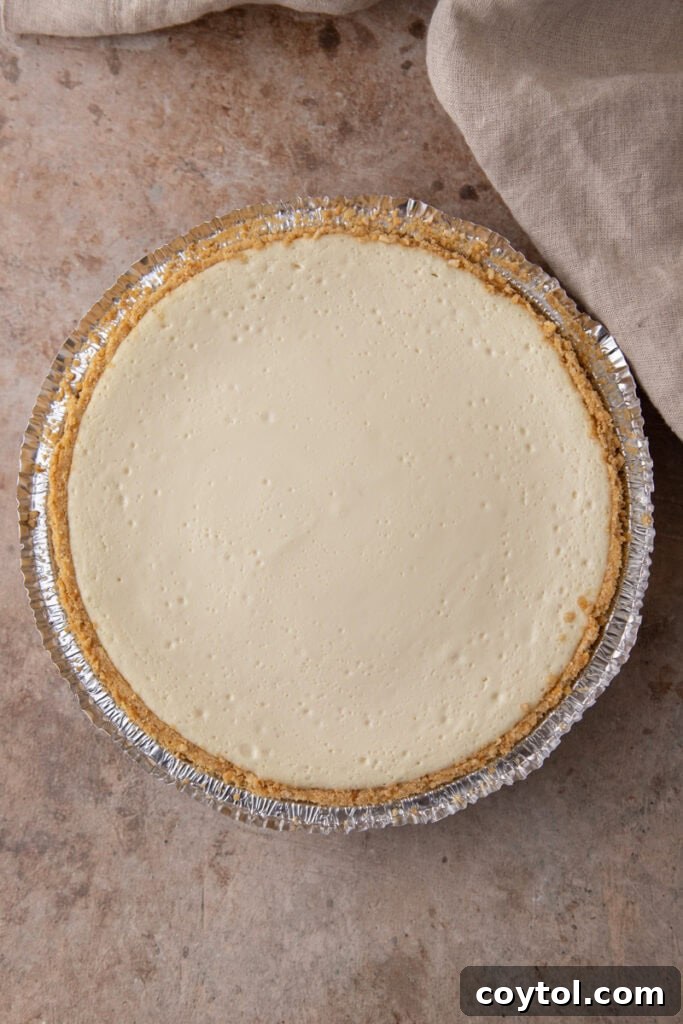
- Bake with a Water Bath: This step is essential for a crack-free and supremely creamy cheesecake. Place your pie pan into a larger baking dish. Pour hot water into the larger dish, creating a water bath that comes about halfway up the sides of the cheesecake pan. Transfer this setup to your preheated oven and bake for approximately 45-50 minutes. The cheesecake is ready when the edges appear set, but the center still has a slight, delicate jiggle when gently nudged.
- Gradual Cooling in the Oven: Once the baking time is complete, turn off the oven but leave the cheesecake inside. Prop the oven door open slightly and allow the cheesecake to cool gradually for an additional 60 minutes. This slow cooling process is vital for preventing drastic temperature changes that can lead to surface cracks, ensuring a beautiful presentation.
- Cool Completely at Room Temperature: After the oven cooling period, remove the cheesecake from the oven and the water bath. Let it continue to cool completely on a wire rack at room temperature. This takes about 1-2 hours. Do not rush this step.
- Chill Thoroughly: Once completely cooled to room temperature, cover the cheesecake tightly with plastic wrap. Transfer it to the refrigerator and chill for a minimum of 2 hours, or ideally, overnight. Proper chilling is paramount for the cheesecake to fully set, develop its rich flavor, and achieve its characteristic firm, yet creamy texture.
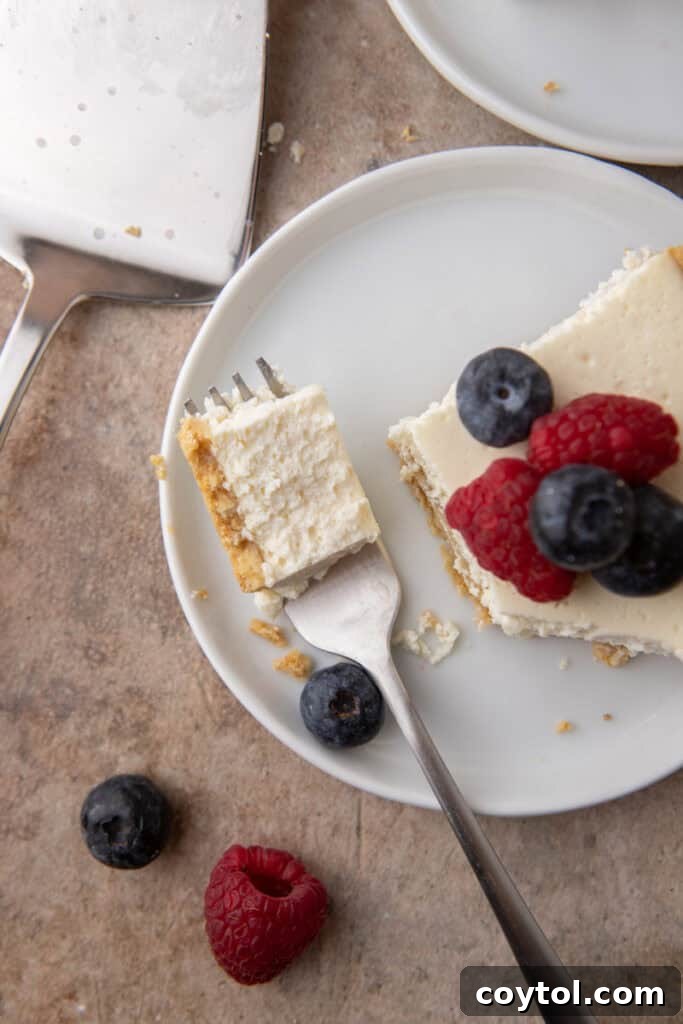
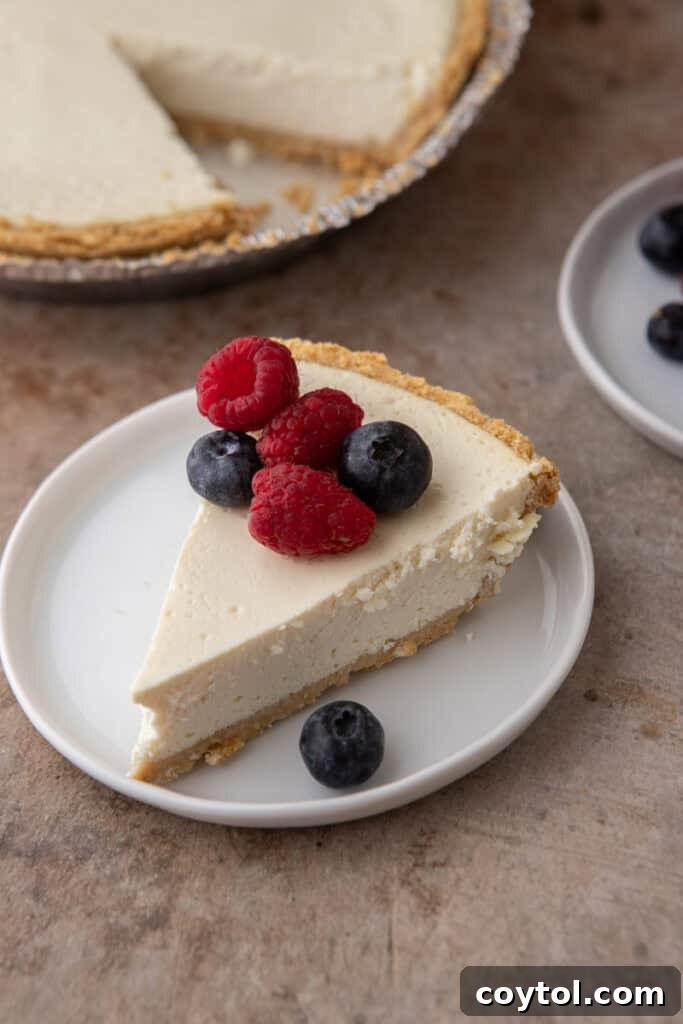
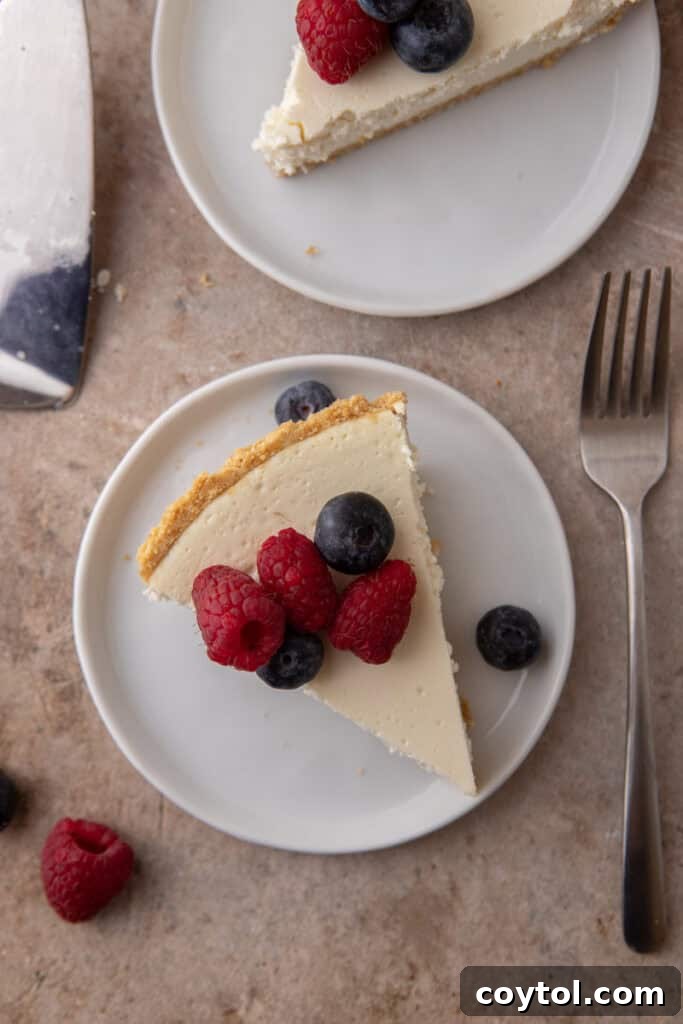
- Slice and Serve: Once thoroughly chilled, your creamy and delicious High Protein Cottage Cheese Cheesecake is ready to be enjoyed! Slice it into generous portions, and for an extra touch of freshness and visual appeal, top each slice with your favorite fresh fruits, a dollop of light whipped cream, or a sprinkle of cinnamon. Enjoy this guilt-free, protein-packed delight!
Expert Tips and Tricks for a Flawless Cottage Cheese Protein Cheesecake
Achieving the perfect High Protein Cottage Cheese Cheesecake is easier than you think with these expert tips and tricks. Follow these guidelines to ensure your cheesecake is smooth, creamy, and crack-free every time:
- Embrace Room-Temperature Ingredients: This is a golden rule for cheesecake baking. Ensure all cold ingredients, especially the cottage cheese, Greek yogurt, and eggs, are brought to room temperature before you begin blending. Room temperature ingredients emulsify more effectively, creating a smoother, more uniform batter. This also prevents overmixing, which can incorporate too much air and lead to cracks during baking. Plan ahead by taking them out of the refrigerator at least 30-60 minutes before you start.
- Blend for Unparalleled Creaminess: The secret to a truly smooth cottage cheese cheesecake lies in thorough blending. Dedicate ample time to pureeing the cottage cheese until it reaches an utterly silky consistency, with absolutely no curds remaining. A powerful high-speed blender or a robust food processor is your best ally here. Achieving this ultra-smooth base is crucial before you introduce the other ingredients, guaranteeing that luxurious, melt-in-your-mouth cheesecake texture.
- Master the “Low and Slow” Baking Technique: Patience is a virtue in cheesecake baking. Resist the temptation to increase the oven temperature, as baking at the correct, lower temperature is essential for a gradual, even set. Overcooking or rapid temperature changes are the primary culprits behind unsightly cracks. The water bath method, as outlined in the instructions, is indispensable for maintaining a moist, even heat, mimicking a gentle steam environment that promotes a perfectly smooth top and creamy interior.
- Prioritize Proper Chilling: The chilling phase is not merely a suggestion; it’s a critical step for developing the cheesecake’s optimal texture and deepening its flavors. After baking and gradual cooling, refrigerate your cheesecake for a minimum of 4 hours, and ideally, overnight. This extended chilling period allows the cheesecake to fully set, firm up, and allows the flavors to meld and mature, resulting in a more cohesive and delicious dessert. A perfectly chilled cheesecake is much easier to slice cleanly and tastes significantly better.
Why This High Protein Cottage Cheese Cheesecake Recipe Deserves a Spot in Your Kitchen
This High Protein Cottage Cheese Cheesecake isn’t just another dessert; it’s a culinary revelation that perfectly marries health and indulgence. Here are compelling reasons why this recipe should become a staple in your healthy eating repertoire:
- Simplicity at Its Best: You’ll be delighted to find that this healthy cottage cheese cake calls for only a handful of common, wholesome ingredients that are readily available at any local grocery store. No obscure items or specialty shops needed, making it an incredibly convenient and accessible recipe for anyone to try.
- A Protein Powerhouse: Boasting an impressive protein content, this cheesecake is an excellent choice for athletes, avid gym-goers, or anyone focused on maintaining a high-protein diet while keeping calorie intake in check. It allows you to satisfy your sweet tooth without derailing your nutritional goals, making it a truly macro-friendly dessert.
- Unmistakably Authentic Cheesecake Experience: Prepare to be amazed! This high-protein cheesecake comes incredibly close to replicating the beloved taste and luxurious texture of a traditional, full-fat cheesecake. You’ll enjoy the same rich, creamy satisfaction, but with the added benefit of healthier ingredients, proving that healthy eating doesn’t mean sacrificing flavor or decadence.
- A Dream for Cottage Cheese Enthusiasts: If you’re a devoted fan of cottage cheese and enjoy incorporating it into creative and delicious recipes, then this cheesecake is an absolute must-try. It transforms this versatile dairy product into an unexpected and delightful dessert, showcasing its incredible potential beyond savory applications.
- Versatile and Customizable: Beyond its core deliciousness, this cheesecake offers immense versatility. It serves as a perfect canvas for various toppings and flavor additions, allowing you to customize it to your liking and explore new taste combinations with ease.
- Guilt-Free Indulgence: Finally, a dessert you can truly savor without an ounce of guilt. Enjoy a slice (or two!) knowing that you’re nourishing your body with high-quality protein and fewer unhealthy fats, all while indulging in a truly satisfying sweet treat.
Frequently Asked Questions – FAQ About This Protein Cheesecake
How do I properly store my High Protein Cottage Cheese Cheesecake?
To keep your leftover cheesecake fresh and delicious, place it in an airtight container and store it in the refrigerator. It will maintain its quality and taste for up to 3 to 4 days. If you wish to extend its shelf life, freezing is an excellent option. For best results, wrap the entire cheesecake or individual slices tightly with plastic wrap first, then place them in an airtight freezer-safe container or a heavy-duty freezer bag. When properly wrapped, your cheesecake can last in the freezer for up to 2 months. Thaw frozen slices in the refrigerator overnight before serving.
What other flavors can I incorporate into this cheesecake?
This High Protein Cottage Cheese Cheesecake provides a wonderful base for creative flavor variations. Here are some ideas to customize your dessert:
- Enhanced Vanilla: For an even more intense vanilla flavor, consider adding a teaspoon of pure vanilla bean paste or the scraped seeds from half a fresh vanilla bean to the batter. This will also give your cheesecake beautiful specks of vanilla.
- Fruity Swirl: Swirl in about 1/3 cup of your favorite fruit jam, fruit compote, or fruit puree (such as raspberry, strawberry, or blueberry) into the cheesecake batter just before baking. Use a knife to create elegant swirls for both flavor and visual appeal.
- Citrus Boost: Combine additional lemon extract or a splash of fresh lemon juice with the lemon zest for a more pronounced citrusy zing, making it even brighter and more refreshing. Orange zest or a touch of orange extract can also offer a delightful twist.
- Chocolate Lover’s Dream: Fold in a handful of sugar-free chocolate chips or a tablespoon of unsweetened cocoa powder into the batter for a rich, chocolatey version.
- Nutty Notes: For a subtle nutty flavor, you could add a teaspoon of almond extract or a very fine layer of crushed nuts to the bottom of your crust before pouring in the filling.
What are the best toppings for my protein cheesecake?
While this protein cheesecake is absolutely delightful on its own, adding toppings can elevate it to an even more impressive dessert. Here are some fantastic options:
- Fresh Berries: A classic and healthy choice. Fresh strawberries, blueberries, raspberries, or a mixed berry medley add natural sweetness, a slight tartness, and beautiful color.
- Caramel Sauce: A drizzle of sugar-free or homemade caramel sauce provides a rich, indulgent counterpoint to the creamy cheesecake.
- Lemon Curd: For those who love a bright, tangy flavor, a spoonful of lemon curd can add a wonderful citrusy punch and luxurious texture.
- Light Whipped Cream: A dollop of light homemade whipped cream or a dairy-free alternative adds a touch of airy elegance.
- Chocolate Shavings: Grated dark chocolate or sugar-free chocolate shavings can add a sophisticated touch and extra richness.
- Nut Butter Drizzle: For an extra protein and healthy fat boost, a light drizzle of almond butter or peanut butter can be surprisingly delicious.
- Fruit Compote: A homemade sugar-free fruit compote made with your favorite fruits can add both texture and concentrated fruit flavor.
What if I don’t have a blender or food processor for the batter?
A blender or food processor is undeniably the ideal tool for achieving the signature smooth, lump-free texture of this cheesecake batter. The power of these appliances is unmatched for breaking down cottage cheese curds. However, if these kitchen tools are unavailable, you have a couple of alternatives. An immersion blender can work effectively for smaller batches or if you’re patient with the blending process in a deeper bowl. If you lack any blending device, you can manually press the cottage cheese through a very fine-mesh sieve or strainer multiple times. This method will require more effort and may not yield the perfectly silken results of a blender, potentially leaving a slightly less smooth texture. While we typically recommend blending for optimal creaminess, these alternatives can still allow you to make the recipe.
Can I use a different sweetener instead of monk fruit?
Absolutely! Monk fruit sweetener is a fantastic choice for its natural origin and zero-calorie profile, but it’s not your only option. You can certainly substitute it with other granulated low-calorie sweeteners such as stevia, erythritol, or xylitol, depending on your dietary preferences and what you have on hand. If you’re not concerned about keeping the cheesecake low-calorie or sugar-free, regular granulated sugar can also be used. When making substitutions, it’s crucial to consult the conversion chart for your chosen sweetener, as their sweetness levels can vary significantly compared to monk fruit or traditional sugar. Adjust the quantity gradually to achieve your desired level of sweetness, tasting the batter (before adding raw eggs, of course!) if possible.
Is it normal for cheesecake to crack during baking or cooling?
While a perfectly smooth, crack-free cheesecake is often the goal, a slight crack on the surface is not uncommon and certainly doesn’t affect the delicious taste or texture of your High Protein Cottage Cheese Cheesecake. However, we can take several preventative measures to minimize the likelihood of cracks. Key strategies include avoiding overmixing the batter, which can incorporate too much air; baking the cheesecake gently in a proper water bath to ensure even, moist heat distribution; and most importantly, allowing the cheesecake to cool very gradually. Drastic temperature changes, such as removing the cheesecake directly from a hot oven into a cold kitchen, are primary causes of cracking. This is why the instruction to turn off the oven and leave the cheesecake inside with the door ajar for an hour is so crucial—it allows for a slow, gentle return to room temperature, significantly reducing stress on the delicate custard and promoting a flawless finish.
High Protein Cottage Cheese Cheesecake Recipe
High Protein Cottage Cheese Cheesecake Recipe
Ingredients
- 1 9-inch graham cracker pie crust
- 2 cup 1% fat cottage cheese at room temperature
- 1 cup nonfat Greek yogurt unsweetened, at room temperature
- 2 large eggs at room temperature
- 1/3 cup monkfruit sweetener
- 2 tsp vanilla extract
- 1/4 tsp salt
- 1 tsp lemon zest
Instructions
-
Preheat your oven to 350°F (175°C).
-
In a blender or food processor, blend the cottage cheese, Greek yogurt, eggs, monk fruit sweetener, vanilla extract, and salt until smooth and well combined. Gently stir in the lemon zest to ensure even distribution.2 cup 1% fat cottage cheese, 1 cup nonfat Greek yogurt, 2 large eggs, 1/3 cup monkfruit sweetener, 2 tsp vanilla extract, 1/4 tsp salt, 1 tsp lemon zest
-
Pour the cheesecake mixture into the graham cracker pie crust, spreading it evenly.1 9-inch graham cracker pie crust
-
Bake the cheesecake in a hot water bath for 45-50 minutes, or until the edges are set and the center has a slight jiggle.
-
Turn off the oven and leave the cheesecake inside with the door slightly propped open for an hour to cool gradually.
-
Remove the cheesecake from the oven and water bath, then allow it to cool completely at room temperature on a wire rack.
-
Once the cheesecake has cooled to room temperature, cover it tightly with plastic wrap and refrigerate for at least 2 hours, or until completely chilled and set.
-
Slice, serve, and enjoy your creamy, high-protein dessert!
Nutrition Information (Per Slice)
Carbohydrates: 22g |
Protein: 12g |
Fat: 7g |
Saturated Fat: 2g |
Polyunsaturated Fat: 1g |
Monounsaturated Fat: 4g |
Trans Fat: 0.01g |
Cholesterol: 44mg |
Sodium: 427mg |
Potassium: 125mg |
Fiber: 0.4g |
Sugar: 6g |
Vitamin A: 84 IU |
Calcium: 75mg |
Iron: 1mg
Nutrition information is automatically calculated and should be considered an approximation. Factors such as specific brands, exact measurements, and optional ingredients may alter nutritional values.
Loved this High Protein Cottage Cheese Cheesecake recipe? Don’t forget to pin it for later!